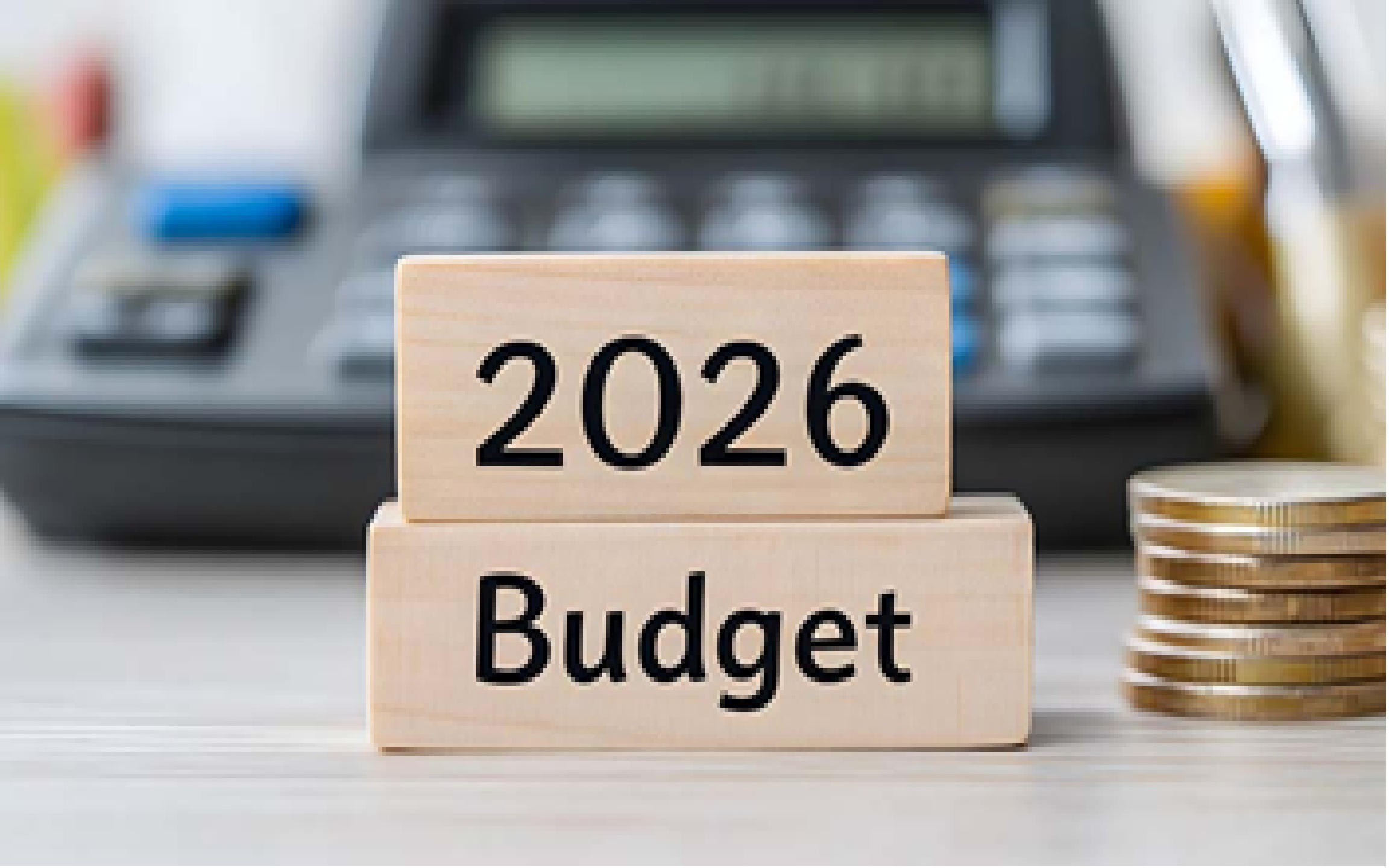
Finance Minister Nirmala Sitharaman presented the Union Budget 2026-27 today in a crisp 108-minute speech — her shortest yet. She called it the “seven-lane highway to Viksit Bharat by 2047”. In plain language: this is a sensible, careful budget that keeps the car on the road without sudden turns. Total spending is ₹50.65 lakh crore (up 9.3% from last year), capital expenditure stays at ₹11.21 lakh crore, and the fiscal deficit is brought down to 4.4% of GDP. Translation: the government is still serious about controlling borrowing even when growth has slowed to its lowest level in four years.
In simple terms, this is a “don’t rock the boat” budget. It does not try to solve every problem in one go. Instead, it chooses three big groups — farmers, the middle class, and the poor — gives each something, but not everything they wanted.
Let us look at each group with clear eyes and simple numbers.
1. Farmers: A Bigger Cheque, But Still No Price Guarantee
What they got:
- PM-Kisan increased from ₹6,000 to ₹9,000 per year for every landowner with up to 2 hectares.
- New Climate-Resilient Crop Income Protection Scheme: ₹18,500 crore.
- Total agriculture allocation: ₹1.52 lakh crore.
What they did not get:
- Legal guarantee of Minimum Support Price (MSP) — the one promise that could have changed everything.
- The ₹9,000 is only for landowners; tenant farmers and sharecroppers (almost 40% of cultivators in Bihar, Bengal, Andhra) get nothing.
- Irrigation scheme (PM Krishi Sinchayee Yojana) gets only ₹9,300 crore when experts say at least ₹45,000 crore is needed.
Simple truth: ₹9,000 per year is ₹750 per month. It helps buy seeds and fertiliser, but it does not protect farmers when market prices crash. Real farm incomes have grown only 1.8% per year since 2019 (NSSO leaked data). This budget continues cash support but does not fix the root problem — farmers still sell at whatever price traders offer.
Verdict for farmers: Helpful painkiller, not surgery.
2. Middle Class: ₹45,000 Extra in Hand, But Still Carrying the Load
What changed in income tax (new regime):
- Zero tax up to ₹12 lakh income (earlier ₹7 lakh).
- With higher standard deduction (₹1 lakh) and rebate, many will pay zero tax up to roughly ₹13–13.5 lakh.
- A ₹15-lakh salaried person saves about ₹45,000 per year.
- Total relief to taxpayers: ₹22,000 crore.
What did not change:
- People who still use the old regime (because they invest in insurance, house loan, etc.) get almost nothing.
- 30% tax rate continues for income above ₹15 lakh — one of the highest in Asia for this income group.
- Home loan interest deduction still capped at ₹2 lakh since 2014, even though house prices in cities have doubled or tripled.
- No relief on school fees or medical bills that eat 25–40% of middle-class budgets.
Simple truth: ₹45,000 extra per year is like getting one extra month’s salary every two years — welcome, but not life-changing when school fees have risen 12–15% per year and health insurance premiums are up 18%.
Verdict for middle class: A decent bonus, but the overall tax burden remains heavy.
3. The Poor: Wider Net, Same Old Holes
What they got:
- Free foodgrain scheme extended till 2030 + extra 5 kg millets per person per month.
- Ayushman Bharat now covers every citizen above 70 years (no income bar) and treatment limit raised to ₹10 lakh.
- Food subsidy: ₹2.14 lakh crore.
What they did not get:
- MGNREGA budget frozen at ₹86,000 crore — in practice, many states already ration jobs because money runs out.
- No urban employment guarantee scheme.
- No pilot of universal basic income.
Simple truth: The safety net is now wider and stronger than ever before. But it is still a net, not a ladder. When work is not available in villages and cities, people still fall through the gaps. And because MGNREGA money is not increased, many poor workers will again be told “budget khatam ho gaya” (budget is over) by December.
Verdict for the poor: Real expansion of dignity and security, but employment creation remains the missing piece.
The Big Picture in One Paragraph:
India’s economy is growing at 6.4–6.5% this year — respectable, but the slowest in four years. Private companies are not investing enough, and people are spending less on daily items (FMCG companies report their lowest volume growth in ten years). In such times, many economists wanted the government to spend more boldly to create jobs and demand. Instead, the government chose discipline — lower fiscal deficit, same capital expenditure in percentage terms. It is betting that interest rates will come down and private investment will finally pick up.
Whether this is wise caution or missed opportunity will be clear only in 2027–28.
Final Verdict in Plain Words:
Budget 2026-27 is a good, honest, middle-of-the-road budget. It does not make big mistakes. It gives something meaningful to every major vote bank. It keeps the fiscal deficit on the promised path. But it does not solve any of India’s big structural problems — neither low farm incomes, nor high middle-class tax burden, nor the crying need for millions of new jobs for the poor. It is a budget that keeps India moving at 6.5% speed when many of us were hoping for 8%.
For a country that wants to be “developed” by 2047, steady speed is good — but we also need a few bold accelerations. This budget chose the safe lane.
0 thoughts on “Budget 2026-27: Steady Hands on the Wheel, But Is the Road Changing Fast Enough?”
Leave a Reply
Your email address will not be published. Required fields are marked *


RECENT NEWS
- Operation Trashi-I: Indian Armed Forces' 326-day high-altitude hunt crushes terror network in J-K's Kishtwar
- 'Leave Iran by all available means': India's fresh advisory for nationals amid escalating tensions
- Lesser known facts about Leonardo DiCaprio
- BJP sees conspiracy behind MLA’s arrest in bribery case in Karnataka
- BJP MLA Chandru Lamani remanded in judicial custody till March 3 in bribery case in Karnataka