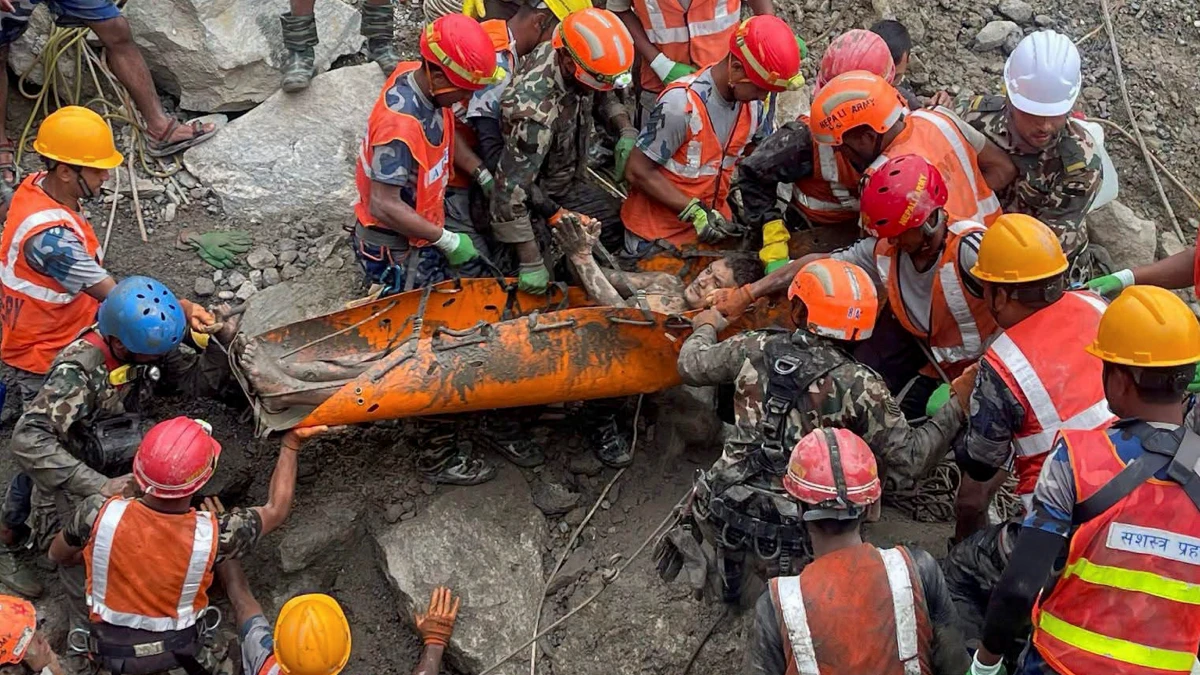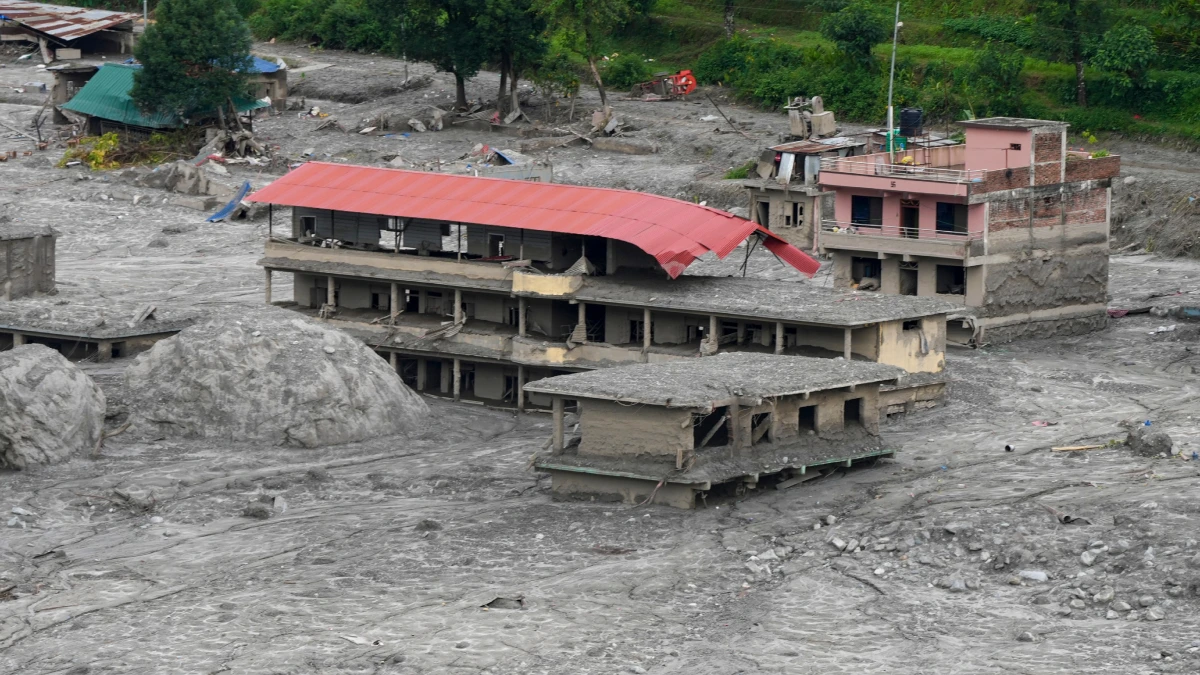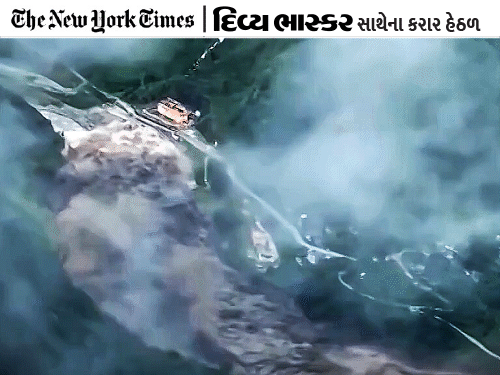
On 26th August, such a disaster occurred in a valley of the Himalayas on the China-Nepal border, in which more than 1200 people lost their lives. Surprisingly, China had already made preparations to face such a disaster in this area. 14 months ago, a glacier pond burst in the same area causing a landslide. Trucks, houses and a bridge were swept away. After this, China closed the border ports for about six months and strengthened the flood protection system. The water level was monitored 24 hours a day, embankments and flood-resistant walls were built and canals were prepared to change the course of water. Officers and villagers were trained, mock drills were conducted and preparations were also reviewed in July. That is, no stone was left unturned to draw lessons from earlier disasters. However, something happened on August 26 for which the entire system was not prepared for it. This time the flood was not caused by the bursting of a glacier and not the lake. A large part of a glacier suddenly burst and came down. Along with it, snow, big boulders and water came down so fast that in no time, it turned into a tsunami-like wave. As soon as it reached the Gyirong Port Complex, this wave destroyed 27 buildings. After that, the devastation moved towards Nepal. According to the officials, there was only a time of six-seven minutes between the breaking of the glacier and reaching the Gyirong port. It was extremely difficult to warn people in such a short time and get them to a safe place. According to experts, the complete picture of why this part of the glacier suddenly broke is still not clear. There could be reasons like the melting of permafrost and weakening of the rocks due to global warming. Why is there so much destruction in the same place again and again? This disaster has raised a big question. Why was a huge border post like Gyirong Port built in such a dangerous place? This port is built in a narrow valley at a place where the Lhande Khola and Trishuli rivers meet. Both the rivers receive water from glaciers. There are bridges, custom yards, dry ports and truck parking on this small flat land. That is, if water, snow or debris comes down from the mountains above, then this area is the first to be affected. According to disaster management expert Saswata Sanyal, even in 2025, people were swept away from the same custom yard and this year too this area was again in the grip of destruction. Despite being dangerous, Gyirong is essential for trade. Despite facing repeated natural disasters, it is not easy for China to leave this place. In the last decade, Gyirong Port has become a major trade route between China and Nepal. About one-third of the total trade between the two countries takes place through this route. Every year, more than 1.80 lakh people also travel between the two countries from here. Earlier, the Zhangmu-Kodari border route was the main route between China and Nepal. But during the 2015 Nepal earthquake, this route was severely damaged. After this, the importance of Gyirong increased. The problem is that even the road to Zhangmu is not safe from natural disasters. In 2016, the same area was flooded due to the bursting of a glacial lake. That is, the danger of disaster does not end in the Himalayas by taking one route to another. An expert has compared this situation to the game of 'Whack-A-Mole'. That is, when a danger arises in one place, we move to another to avoid it, but a new danger emerges there. Now, it is not enough to just watch floods. This incident has shown that it is no longer enough to prepare in view of any one natural calamity in the Himalayas. Earlier, the monitoring system used to monitor the hazards of floods, flash floods or avalanches separately. But this time the dangers were added one after another. First the glacier breached and then the ice and rocks came down. In no time, this debris turned into a torrential flow of water and wreaked havoc in the areas below. Experts call it the 'Cascade of Hazards'. Glaciers are melting rapidly due to rising temperatures. In such a situation, this series of disasters can become more complex, which will also be difficult to predict in advance. According to Saswata Sanyal, an expert at ICIMOD, preparations can no longer be done keeping in mind just one threat in the mountains.

RSS News
Divyabhaskar
0 thoughts on “Destruction in the Himalayas in 7 minutes, China's preparations failed: The last time the lake burst, this time the glacier broke”
Leave a Reply
Your email address will not be published. Required fields are marked *



RECENT NEWS
- Trump-Gov. launches games to expel illegal immigrants: Players will be chased and caught; Mexico will build a wall on the border
- Two trapped workers rescued from Nepal tunnel 9 days after flash floods, more breakthroughs expected
- Estonia defence minister resigns over botched Rs 700 crore deal with Indian-owned firm; all about the case
- Jaishankar meets Zelenskyy in Kyiv, says talks centered on approaches to end the ongoing conflict
- 'India ready to help end Russia-Ukraine war': Jaishankar offers mediation, backs dialogue and diplomacy