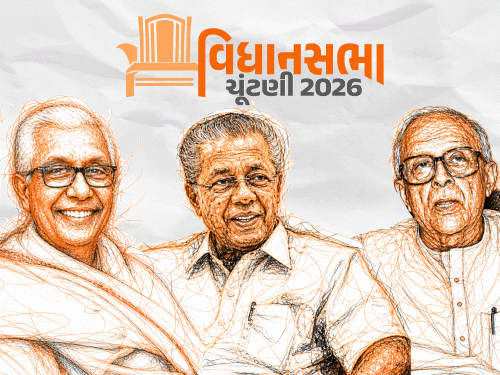
The Left Alliance LDF led by Pinarayi Vijayan has suffered defeat in the Kerala Assembly elections. The Congress-led UDF has returned to power after 10 years by winning more than 90 of the 140 seats. This is going to be the first time in 49 years that there is no Left government in any state in the country after this defeat in Kerala. Let's know the main things related to the expansion, victory and defeat of the Left in the country. Before that, let's know about the Left, i.e. Communist ideology. The Communist Party of India (CPI) refused to accept India's independence in 1947 as true independence. At that time, the party had said that this independence was an incomplete and compromise result, which it termed as 'false freedom'. It took the party more than 5 years to fully accept this fact. In March 1948 there was a major change within the party. P.C. Joshi was replaced by B.T. Ranadive (BTR) became the new General Secretary. Soon after his arrival, the 'Randiv Line' was implemented in the party, which was extremely radical and aggressive. It was under the same thinking that the CPI opposed the Constitution even before it came into force in January 1950. He argued that Congress leaders were imposing a 'constitution of slavery' on the Indian people. The Left Party called for a violent overthrow of the Nehru government. This policy failed miserably during 1948 and 1949. This was followed by B.T. in May-June 1950. Ranadive was removed from the post. The Central Committee of the party admitted that the call for a nationwide strike and revolt on 9 March 1949 was a grave mistake. After almost 6 years, the CPI was forced to abandon its radical ideology and accept the truth of the country's independence. In 1956, the world's first elected democratic Left government merged Travancore, Cochin and Malabar to form the new state of Kerala. Assembly elections were held here for the first time in March 1957. The Communist Party of India (CPI) won 60 seats in the 126-member Assembly. He formed the government by merging 5 independents. This was the first elected government of the Left in the world. E.M.S. Namboodiripad enacted two major laws just a week after he became the chief minister. The first is the Land Reforms Act and the second is on reforms in education. After the Land Reforms Act, partner farmers were allowed to buy land. The limit of landholding has been fixed. Whereas, strict rules were made to regulate private institutions through the Education Bill. On February 2, 1959, Indira Gandhi became the national president of the Congress. After this he went to Kerala. On his return, he submitted his report to Prime Minister Nehru. On 31 July 1959, the Government of Kerala was dismissed. In the meantime, pictures of Gandhi have been removed from schools and colleges in Kerala and pictures of Mao and Stalin have been removed. It was said that communist countries had sent funds to form a government in Namboodiripad. Lakhs of people took to the streets under the leadership of Mannath Pillai, popularly known as the Gandhi of 'Kerala'. Thousands of people were thrown into jail. Police resorted to lathicharge to suppress the agitation. In this, a pregnant woman from the fishing community died. The agitation intensified. There was violence everywhere. Another major split due to the government's divergent stance on the China war The Indo-China war of 1962 widened the ideological rift within the CPI. A faction of the party was in support of the Nehru government. The other group was not ready to consider China as an aggressor. In the midst of this debate of 'Nationalism vs. International Communism', pro-China leaders were imprisoned. This tension shook the party's base and the communist movement split into two parts. Two years after the war, in 1964, the differences grew so much that the Communist Party officially split. The supporters of the soft policy of the Soviet Union remained in the CPI, while the revolutionary leaders formed the Marxist Communist Party (CPI-M). In 1967, the Left came to power in West Bengal for the first time through the 'United Front' coalition in 1967. At that time, Ajoy Mukherjee became the chief minister and Jyoti Basu was the deputy chief minister. However, the government remained very unstable. In 1975, when Indira Gandhi imposed Emergency in the country, the CPI initially supported Indira Gandhi and the Emergency, while the CPI(M) opposed it and many of its leaders went to jail. In the 1977 assembly elections, the Left won a thumping majority in Bengal and it was here that the long rule of the Communists in the state began. Jyoti Basu became the Chief Minister of the state and remained the Chief Minister of the state continuously till 2000. He was succeeded by Buddhadeb Bhattacharya, who tried to bring industries to the state. But the Mamata Banerjee-led Trinamool Congress ended the 34-year-old rule of the Communists in 2011 after land acquisition disputes in Singur and Nandigram. At that time, CM Buddhadeb Bhattacharya himself lost the election. Former CBI Director Arun Prasad Mukherjee has said in his book 'Rajiv Gandhi, Jyoti Basu, Untouched Aspects of Indrajit Gupta' that during the turbulent period of 1990 and 1991, Rajiv Gandhi wanted Jyoti Basu to become the Prime Minister of the country. Rajiv Gandhi first expressed his desire to meet Jyoti Basu in October 1990, but then Basu refused, saying that it could not be his personal decision and only his party (CPM) could take a decision on it. Chandrashekhar became the Prime Minister only after the Left leaders refused to do so. Then in 1991, when the Chandra Shekhar government fell, Rajiv Gandhi once again approached Jyoti Basu. This time too, Jyoti Basu left the decision to the party leadership and refused to become the Prime Minister. After this, in 1996, the MPs of the United Front again offered Basu to become the Prime Minister. This time too, most of the party leaders did not agree. Senior Left leader Sitaram Yechury said that most people believed at that time that the Left Front had only 32 MPs, so it would not be appropriate to be part of a weak government. In the 2004 Lok Sabha elections, the Left parties performed at their best. The Left Front won 80 seats. Manmohan Singh's first UPA government relied entirely on the support of the Left. He played a key role in the implementation of laws like MGNREGA and RTI. 2008, Nuclear Deal: The Left opposed the UPA on the issue of the Indo-US nuclear deal. He withdrew his support from UPA-1. In the 18 years since then, the Left has never come close to power at the Centre. Bengal in 2011, Tripura in 2018 and Kerala in 2026 -------------------------------------------------- also read this news. Vijay's party TVK close to majority in Tamil Nadu: Actor's father says ready for alliance with Congress, Congress returns after 10 years in Kerala Counting of votes is underway in Assam, Tamil Nadu, Kerala and Puducherry assembly seats. According to the latest trends, Tamil Nadu is witnessing a major upheaval. Actor Vijay's party TVK, which was formed 2 years ago, has become number one. TVK is leading in 105 seats. Read the full story...

RSS News
Divyabhaskar
0 thoughts on “For the first time in 49 years, the Left government in the country is red-lipped: Namboodiripad came to power in Kerala in 1957; End there in 2026”
Leave a Reply
Your email address will not be published. Required fields are marked *

RECENT NEWS
- Morning News Brief: Bengal-Tamil Nadu CM loses polls, power also loses, BJP wins Gujarat seat in by-election, claims - Iran launches missile on US ship
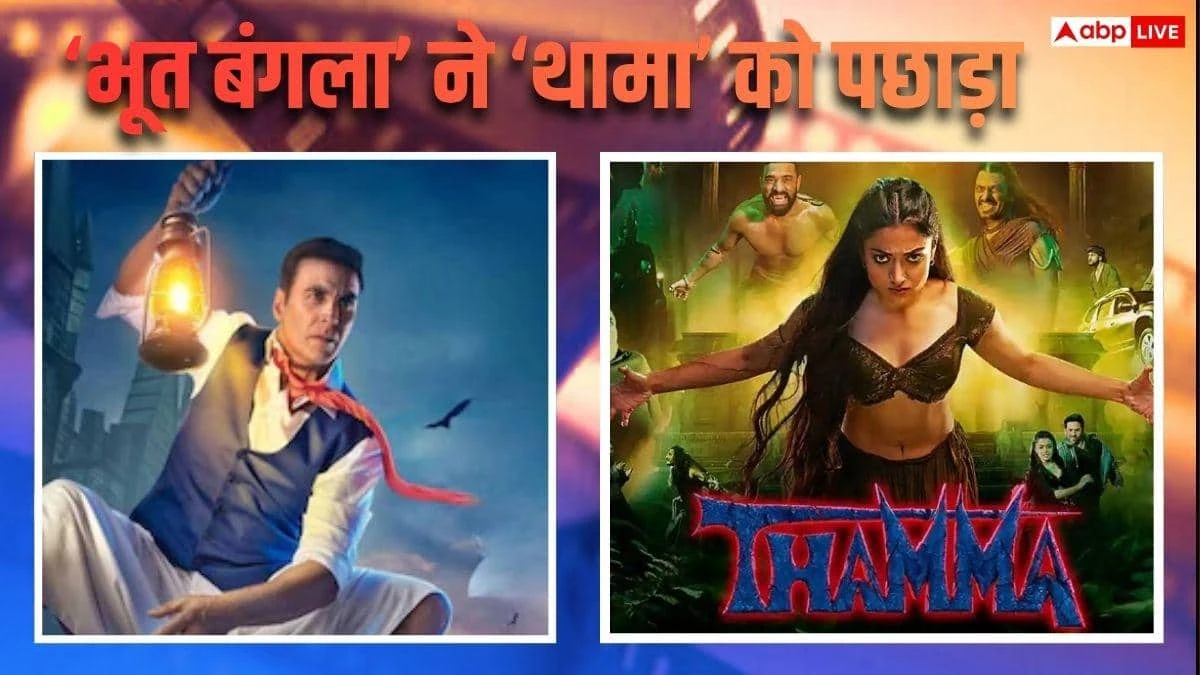
- Bhooth Bangla BO Collection: 'Bhoot Bangla' dusts 'Thama', becomes the top-5 highest grosser horror-comedy film!
- 'Numbers and opinions keep changing...', box office is necessary for the success of films? Adah Sharma responds
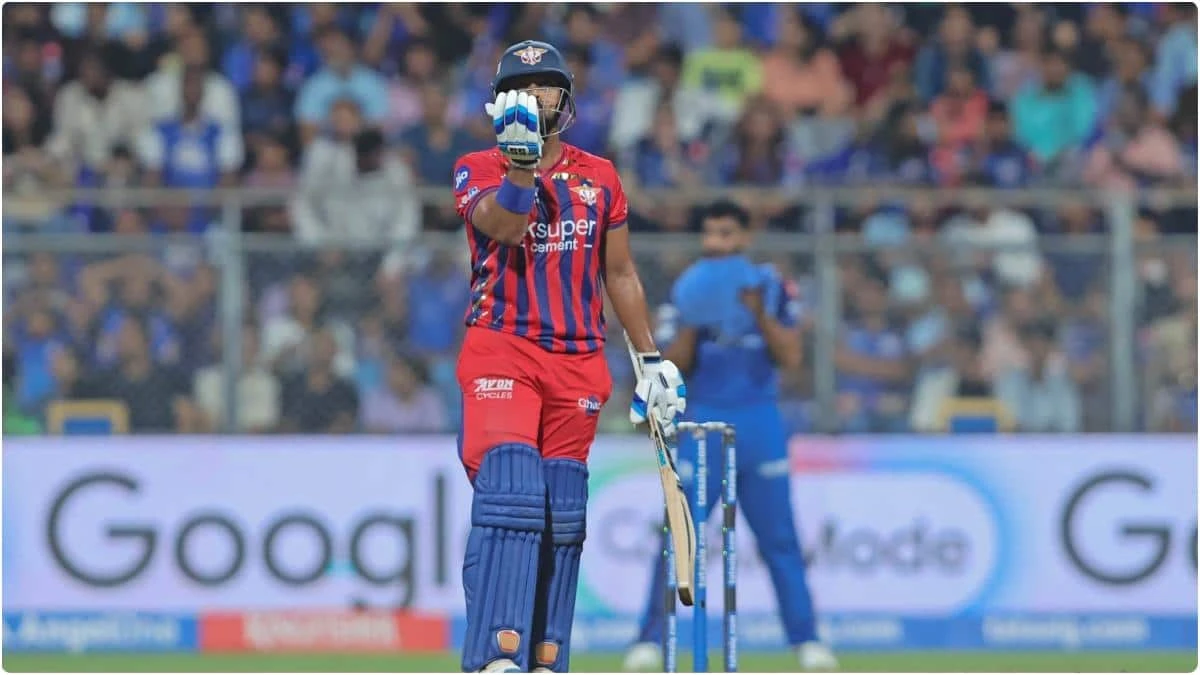
- 6,6,6,6,6,6,6... Nicholas Pooran scored the second-fastest half-century in IPL, created history against MI.
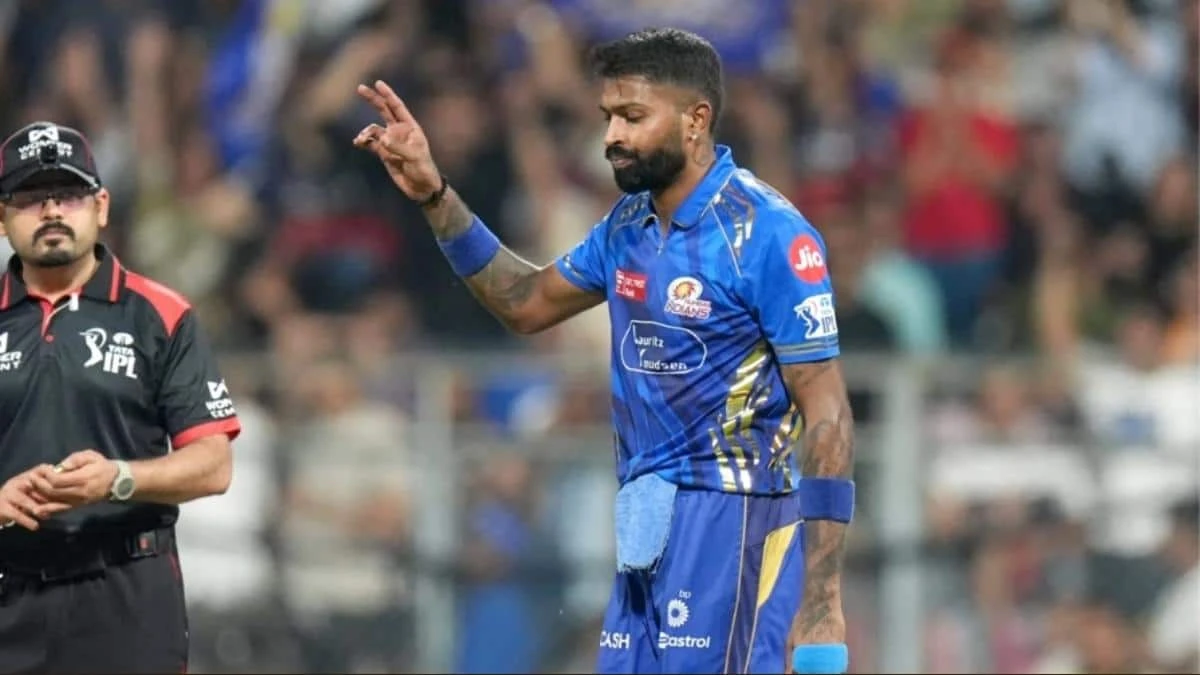
- How many matches is Hardik Pandya out for, how long will he be able to return? Know the latest updates