Pakistan seems to be entering a period of internal turmoil once again. It repeats the familiar pattern of the past, but this time it is unfolding during far more difficult regional and economic conditions for us. Clashes involving Baloch insurgents and Islamist militants have led to a large number of deaths and damage to security forces in the past. Such incidents are not isolated. On the one hand, the Baloch Liberation Army has renewed its insurgent campaign in Balochistan through direct clashes with the Pakistan Army. On the other hand, the recent military raids in Harnai and Panjgur appear to be against the network of the Tehreek-e-Taliban Pakistan. This internal challenge of the dual front — separatist insurgency and ideological terrorism — is similar to that that which has plagued Pakistan in the past. The deployment of the Pakistan Army has not yet reached the level of Operation Zarb-e-Azb, but the experience of the past shows that prolonged conflict often pushes in that direction. The internal deployment of large-scale forces also brings with it risks – such as the militarization of civilian areas, political instability and the withdrawal of forces from the outer fronts. The memory of the attack on the Army Public School in Peshawar on December 16, 2014 is still deeply etched in Pakistan's strategic consciousness. The circumstances that gave rise to her have not been basically eliminated to this day. This is where Pakistan's enduring contradiction becomes apparent. Islamist terrorism is still seen as a security problem, not an ideological one. There has been no sustained effort to break the network of radicalization, improve religious discourse or challenge the extremist narrative within the society. At the same time, the Baloch insurgency is being confronted almost entirely through the use of force. These are two very different types of conflicts, but Pakistan is dealing with both in the same clichéd manner. The regional dimension further complicates this problem. Today's Afghanistan is not just Pakistan's neighbour, but a region from where activities that weaken Pakistan are possible. Pakistan's influence on Kabul has proved to be much weaker than expected. The US — which is now again an ally of Pakistan — has never shown interest in long-term stability. Saudi Arabia, Türkiye and other influential Islamic countries have also shown little interest in taking religious or ideological initiatives to counter radicalisation in Pakistan. Pakistan is affected by terrorism not because it lacks military capability, but because it has never resolved the ideological, political and regional contradictions that perpetuate violence. But it should be a matter of concern for neighbours like us. Because history shows that whenever Pakistan's internal security cycle takes a violent turn, its consequences extend beyond its borders. As has often been the case, Pakistan will try to blame an external conspiracy for this wave of violence, and as always, it will point fingers at India. But such accusations cannot turn away from the truth. Nurturing terrorist groups to use them in Jammu and Kashmir for decades can prove to be an axe for them. Terrorist ecosystems are not limited to the boundaries set for themselves. Society is also affected by the process of normalising violence as a policy tool, in which the use of force is justified for all kinds of reasons – religious, ethnic or political. Unless there is organized social resistance against it, the chances of meaningful change are slim. (These are the author's own views)

RSS News
Bhaskar
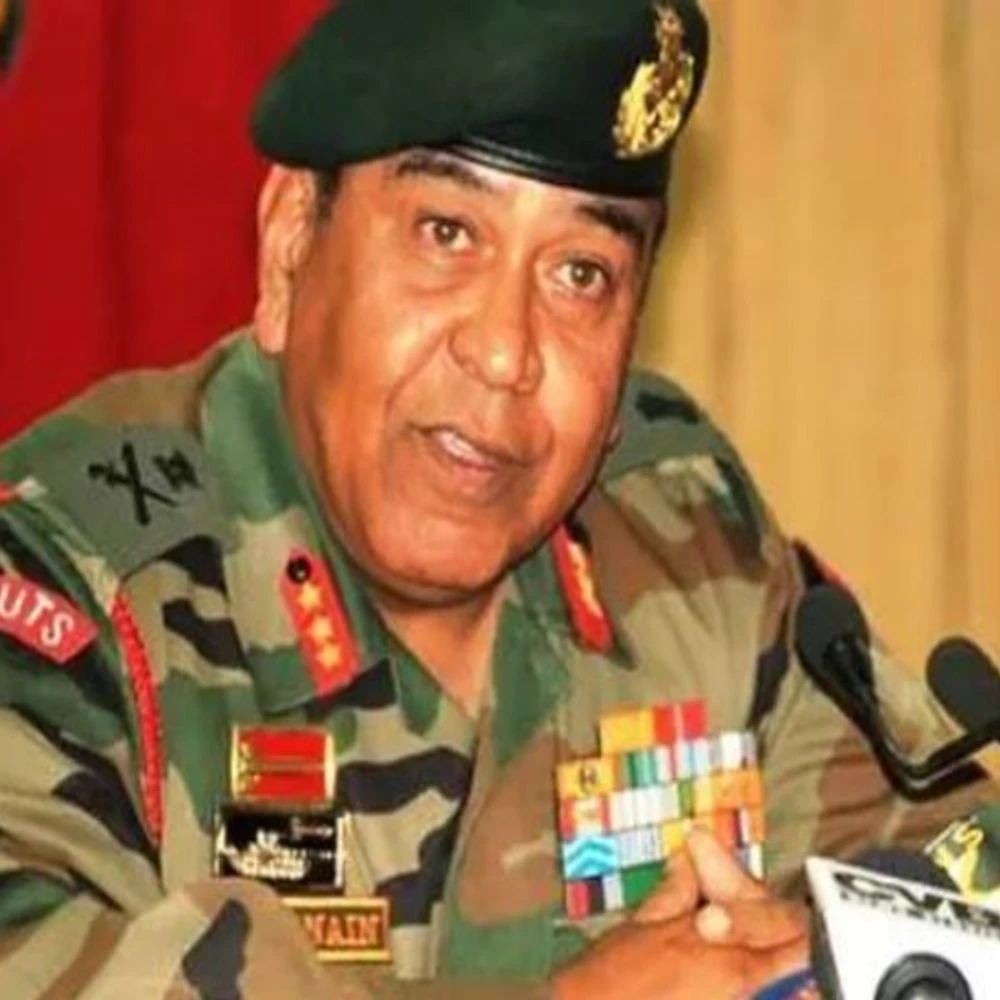
0 thoughts on “Lt Gen Syed Ata Hasnain's column: Pakistan itself does not want to end the root of terror”
Leave a Reply
Your email address will not be published. Required fields are marked *



RECENT NEWS
- Air India plane flown afterphysical checks, no abnormal parameters noticed: DGCA
- Air India fuel switch cutoff incident: DGCA reveals probe findings after London-Bengaluru flight glitch
- Mahashivratri 2026: Do this special puja ritual on Mahashivratri to get rid of Kalsarp Dosh
- Delhi court summons Jairam Ramesh, Pawan Khera, Ragini Nayak in criminal defamation case filed by Rajat Sharma
- Ignored in T20 World Cup, now Steve Smith will play in PSL in Pakistan; Know how much salary you will get