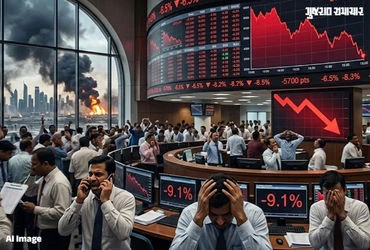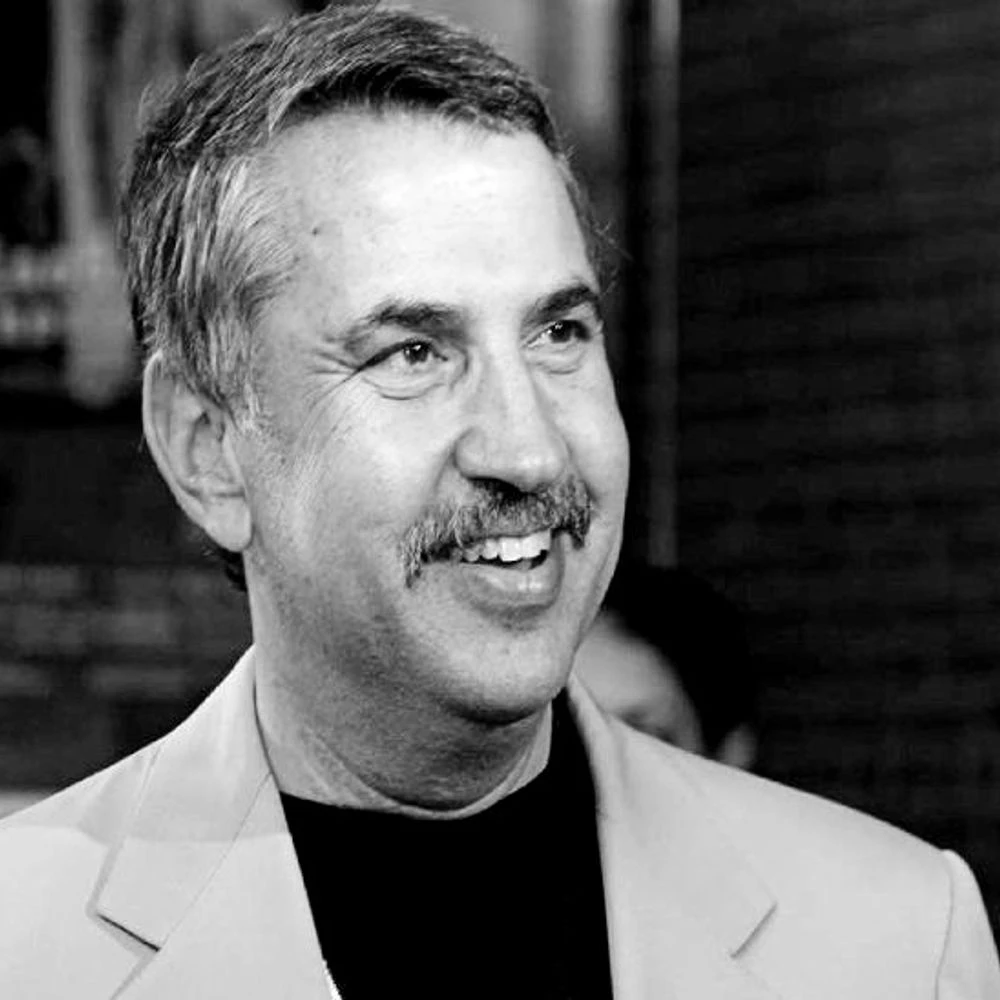
To understand the wars of the Middle East, one has to look at many aspects at once. Its complexities intertwine with religion, oil, tribal politics, and the diplomacy of the superpowers. Personally, I want this attempt to overthrow Tehran's theocratic regime to succeed. It is a regime that crushes its people, destabilizes its neighbors and hollows out an ancient civilization from within. There can hardly be a bigger development to steer the Middle East in a more liberal and inclusive direction — provided Tehran has a leadership that gives the Iranians a real chance at their future. But it won't be easy. This regime has deep roots and is not going to fall just from air strikes. Israel has not been able to eliminate Hamas in Gaza after more than two years of fierce air and ground fighting — even though it is right next to it. Still, even if this US-Israeli attack does not turn into the Iranian people's movement that Trump has appealed, it could have some unexpected positive effects. For example, an Islamic Republic 2.0 that is less aggressive to its citizens and neighbors. But equally likely is the disintegration of Iran as a geographical entity. The end of this war will not be decided by the battle front alone. The oil and financial markets will be equally decisive. Iran is already on the verge of economic collapse. His posture is poor. Europe is now more reliant on LNG coming from the Persian Gulf after reducing gas imports from Russia. A sharp jump in energy prices will drive up inflation and could anger Trump's supporters—many of whom are already not in favor of embroiled in another war in the Middle East. Many powerful people would like this war to be short. These factors will determine when and how the negotiations between Trump and Tehran move forward. We cannot allow this war in the name of democracy and the rule of law in Iran to be an excuse to distract attention from the threats to democratic institutions within the United States and Israel. Trump speaks of democratic values in Tehran, while at the same time his administration's domestic policies are in question. The situation in Israel is no less complicated. Will this war give Netanyahu a political edge in the elections scheduled for this year? Iran has exerted influence over four Arab countries — Syria, Lebanon, Iraq and Yemen — by setting up proxy networks, and fueling sectarian divisions to undermine the liberals in all of them. Constant pressure from Israel and the US over the past two years has weakened Tehran's grip. The effect of this was that the Iran-backed Assad regime in Syria collapsed and Lebanon was able to get out of the grip of Hezbollah. It should also be remembered that Iranian society has naturally been among the societies with the most positive attitudes towards the West. If that trend is allowed to emerge and spread and it replaces the divisive radical Islamist agenda spread by the Iranian regime, a more inclusive future for the Middle East could be a possibility. It is not without reason that one of the most popular slogans during the anti-regime demonstrations in Iran has been: No Gaza, not Lebanon, my life for Iran. Persians make up only 60 percent of Iran's population. The remaining 40 percent is a group of minorities, mostly Azeri, Kurds, Lurs, Arabs and Balochs. Everyone has connections to lands outside Iran, especially Azeri to Azerbaijan and Kurds to Kurdistan. If there is a long period of chaos in Tehran, any of these can fall apart and Iran can actually disintegrate. (From The New York Times)

RSS News
Bhaskar
0 thoughts on “Thomas L. Friedman's column: The end of this war will not be determined by the battle front itself”
Leave a Reply
Your email address will not be published. Required fields are marked *



RECENT NEWS
- Tuesday Box Office: 'The Kerala Story 2' reigns at the box office, beats 'O Romeo' and 'Border 2'
- Indian stock market crashes amid war in Gulf countries, Sensex plunges over 1600 points
- The Gulf countries are at war! India's oldest friend ready to help if there is a possible oil crisis
- India has done wonders in the midst of the war in the Middle East! Pakistan, America will also be surprised by this weapon
- Thomas L. Friedman's column: The end of this war will not be determined by the battle front itself