
India’s aspiration to become a developed nation by 2047 is ambitious, emotive, and politically powerful. It invokes images of prosperity, global stature, technological leadership, and improved quality of life for citizens. Yet, beneath this optimism lies a structural contradiction that threatens the very foundation of this vision: India’s cities, which will carry the burden of development, remain institutionally weak and politically marginalised.
Development in the twenty-first century is urban-led. By 2047, more than half of India’s population will reside in cities. These urban areas will generate close to 80 per cent of national GDP, consume the majority of energy, and contribute over 70 per cent of greenhouse gas emissions despite occupying barely 3–4 per cent of India’s landmass. This intense concentration of people, capital, infrastructure, and environmental impact makes cities the most critical arena for intervention. If India fails in its cities, it will fail nationally. Yet, cities continue to be treated not as engines of development but as administrative conveniences.
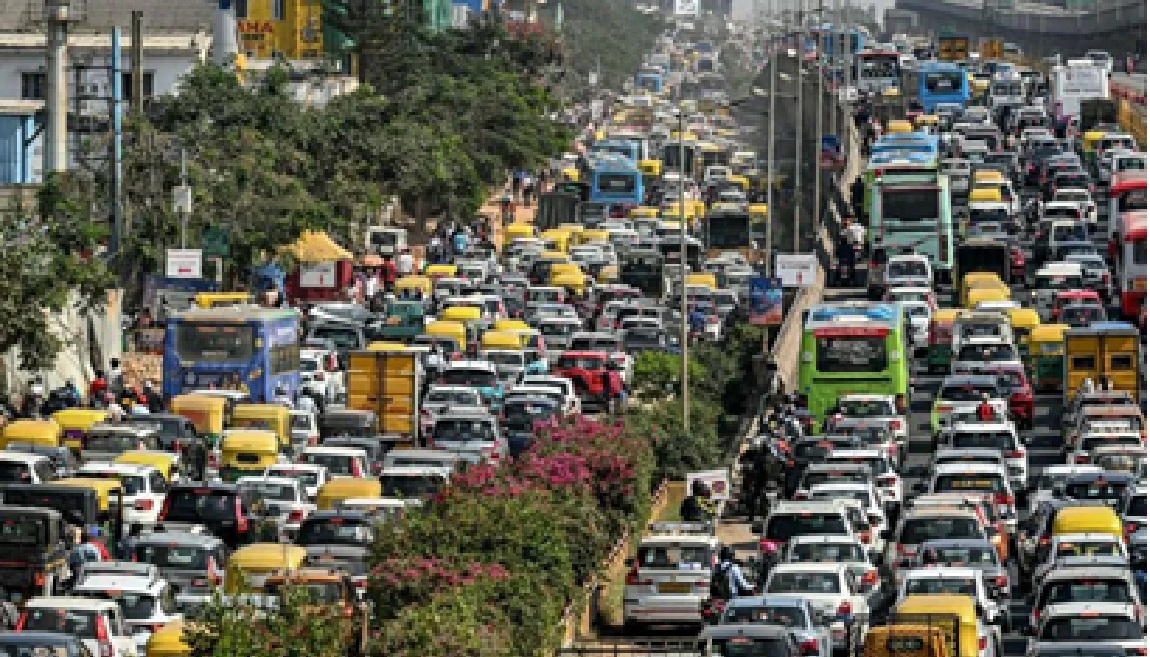
India’s urban challenges are no longer peripheral; they are structural and systemic. Traffic congestion consumes productive hours and increases fuel consumption. Air pollution has turned into a silent public health emergency. Solid waste systems are overwhelmed, with landfills expanding faster than planned infrastructure. Groundwater levels are declining at alarming rates, pushing cities towards chronic water stress. These problems intersect with governance failures, fragmented authority, weak accountability, and poor coordination.
Despite this, urban political discourse remains largely disconnected from urban realities. Electoral debates are often dominated by identity-driven issues like language, caste, symbolism, and cultural assertion, while questions of mobility, housing, sanitation, climate resilience, and service delivery receive limited sustained attention. Cities are discussed emotionally, but rarely structurally. This mismatch between lived urban experience and political priorities exposes a deeper problem: cities are expected to perform without being empowered.
India’s constitutional framework formally recognises local governments through the 73rd and 74th Constitutional Amendments. On paper, these amendments were meant to decentralise power, bring governance closer to people, and strengthen democratic participation at the local level. In practice, however, decentralisation has remained incomplete and often symbolic.Urban local bodies today depend on state governments for more than 90 per cent of their financial resources. Their own revenue bases, property tax, user charges, local fees are either politically constrained or administratively weak. Without fiscal autonomy, cities cannot plan long-term infrastructure, invest in climate adaptation, or respond flexibly to local needs. Development becomes project-based and reactive rather than strategic.
Legal authority is similarly constrained. Even where municipalities are responsible for service delivery, the final decision-making power on staffing, regulations, planning approvals, and institutional reforms rests with the state government. This creates a system where responsibility is decentralised, but authority is not. As a result, urban governance operates in a constant state of dependence.
A critical but often overlooked issue is the absence of a dedicated, empowered urban bureaucracy accountable to city governments. Municipal officials are frequently drawn from state cadres, with career progression, transfers, and disciplinary control resting outside the city. Even when urban cadres exist, their autonomy is limited. This leads to a structural contradiction: cities are blamed for inefficiency and failure, yet they lack control over finances, personnel, and rules. Governance becomes fragmented, slow, and risk-averse, undermining innovation and responsiveness.
At the heart of this problem lies the politics of power. Financial and administrative authority is deeply political, and no level of government willingly relinquishes it. State governments often prefer to control cities rather than devolve power, even as urban populations and economic stakes grow. The Centre, too, engages cities largely through centrally sponsored schemes, reinforcing vertical accountability rather than local autonomy.
The intense political interest in financially strong municipal bodies illustrates this reality. Cities with substantial budgets attract attention not because of democratic significance, but because of control over resources. Where elected councils are delayed or replaced by administrators, governance may continue but democracy weakens. This model treats cities as implementation arms, not as governments in their own right.
In many global cities, the mayor is among the most powerful political executives, commanding authority over budgets, transport systems, policing priorities, housing policy, and climate action. These cities can plan, negotiate, and innovate because decision-making power aligns with responsibility. In India, the mayor is often a ceremonial figure, while real authority flows from distant state capitals. This distance between decision-makers and daily urban life creates governance that is procedurally correct but substantively disconnected.
India’s urban crisis is not the result of insufficient schemes, technology, or policy documents. It is the outcome of structural disempowerment. Without fiscal autonomy, legal authority, and administrative control, cities cannot deliver inclusive growth, climate resilience, or quality of life at scale. A developed nation cannot be built on weak cities. Economic productivity, environmental sustainability, and social equity all depend on urban systems that are empowered to govern, not merely to execute instructions.
India’s Vision 2047 demands more than aspiration; it demands institutional courage. Decentralisation cannot remain rhetorical. Empowering cities is not a threat to the Centre or the states; it is a prerequisite for national development. The fundamental lesson is simple yet uncomfortable: power and responsibility must travel together.
Until India confronts this structural reality, the promise of a developed nation will rest on fragile foundations. And without strong, autonomous, accountable cities, the vision of 2047 risks remaining a slogan rather than a lived reality.

IIIT Delhi | Prabodhini Policy Fellow | NET Qualified | AIPRIS - M.S. University | BRICS IF | Delhi University | UN V-force leader | Ministry of WCD, GOI|
0 thoughts on “Weak Cities, Fragile Dreams: Why India’s Vision 2047 Rests on Urban Empowerment”
Leave a Reply
Your email address will not be published. Required fields are marked *



RECENT NEWS
- Rajdeep Sardesai's column: Serious efforts will have to be made towards energy self-sufficiency
- Morning News Brief: Blockade of Hormuz Strait begins, Pakistan objects to channel playing Asha Bhosle's song; BJP to win 32 seats in Navsari
- SRH vs RR Highlights: First Ishan Kishan beaten, then Praful Hinge and Saqib Hussain broke Rajasthan's arrogance, got the first defeat of the season
- Who is Praful Hinge? Who made history by taking 3 wickets in the first over of IPL; Learn everything about them
- South Movies BO: These three South films rained money at the box office, one collection crossed 70 crores