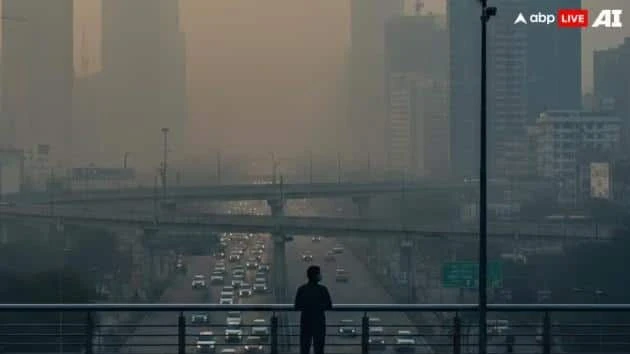
Justin M Bharucha : The Bombay High Court has been hearing suo motu PIL on air pollution for years and recent hearings have brought to light the fundamental problems that have led to the AQI crisis – we have the right sources of pollution. There is a lack of data needed to identify the way, and We certainly do not implement measures to reduce pollution
Government of India in reply to the Parliament has stated that there is no data showing a direct link between high AQI and lung diseases, which has received public attention. However, no one has mentioned that no initiative is underway to collect and compile this data. It is obvious that there is a correlation or correlation. Reason - because in the same reply of the government. "... Development of materials targeting air pollution-related diseases...
Lack of data is a common problem in our country in terms of air pollution. During the hearing earlier this week, the Bombay High Court said, among other things, that Note that the installed pollution sensors are not working.
High Court had to point out that pollution control guidelines have not been implemented at construction sites and; BMC What a huge gap there is between the apparent efforts that were made to implement the guidelines. The evidence that has come before the BMC, i.e., the data, shows that Life in the city shows something different, and the pollution sensor On the changes that occur in terms of space in our megacities (perhaps all our urban areas) in the network; And not paying attention to population density, it leaves us and the courts to work in a vacuum><
Bigger crisis, less attention
Most surprising is that so little attention has been paid to the most important health crisis we have faced since the pandemic. As I have always said, we are connected by the breath- We breathe the same air, and Now in every breath There are high amounts of pollutants that are clearly harmful to health. We all read sporadic media reports comparing breathing a day in Mumbai or Delhi to smoking [some large numbers] cigarettes. We do our work carefreely.
at least we are the current and upcoming economic ones; Ignoring the losses. Simply put, health care costs a lot, and our AQI crisis is a health hazard. What we know about the consequences is worrisome even in this limited sense.
There are many factors that have brought us to this point. Different regulations, ambitious policies at the grassroots level; Very little and absolutely. Not used and No result They don't leave, And, there is a great need to strike a balance between our clean air objectives and the needs of our growing economy><
In my opinion, all this is due to two major drawbacks: lack of data and lack of direct financial incentives and disincentives. Rest All the factors, and only a few have been stated in this article, cannot be solved without addressing these major shortcomings.
Whydata is so important
data is very important. We need to understand the pollution in our areas and also know where it comes from. For example, the air quality sensor network in Mumbai has improved significantly in the last few years, but it does not cover every ward, while it should cover every area of every ward. We have properly calibrated, low-cost, areas There is a need to move towards increasing the number of sensors using a crowded sensor network, which can help in the existing information flow. We work to monitor pollution and identify its sources. There is a special need for a data system
source attribution brings to the fore another drawback of the data: we consider ourselves to be the maximum city and arbs prima, we are part of the MMR airshed and in that context need to understand air pollution, especially considering the daily land and sea winds, of which we are talking about; We believe that air pollution is air pollution in MMR; Helps in spreading. What Really; Does the pollution from MMR affect the city? Everyday experience and common man's logic suggest that this happens, but we only know what we don't know><
These points must be addressed if we want to make any progress in understanding the air we breathe and its impact. Sharing data in a transparent way can help raise awareness and reduce our AQI crisis to health – or economic, if it is more effective. It will also help in reducing the consequences. I have to show that MPCB, CSIR– NEERI, and IIT The Air Quality Monitoring, Emission Inventory and Source Apportionment Study for Mumbai conducted by the AYUSH had more to do but clearly little has been done to implement these recommendations<>
(The author is a Managing Partner at Bharucha & Partners)
Disclaimer: The opinions, beliefs, and views expressed by the various authors and forum participants on this website are personal and do not reflect the opinions, beliefs, and views of ABP Network Pvt. Ltd.

0 thoughts on “OPINION | AQI Crisis: Why India's fight against pollution is failing due to incomplete data”
Leave a Reply
Your email address will not be published. Required fields are marked *



RECENT NEWS
- Who is the man who went viral overnight after meeting Kohli in Vadodara?: Face, eyes, smiles, gestures all match; As soon as he saw it, Virat said, 'You look like a carbon copy of me.
- Drunk driver breaks wall of Sarabhai campus
- Pits dug by Vadodara Corporation are becoming fatal, cow rescued after the death of a young man
- Pune woman's 15 tolas of jewellery stolen from Vadodara bus depot
- January 12 Tarot Horoscope: The magic of Cancer's skills will work, small steps of Scorpio people will give big results