Among the writers nominated for the Nobel Prize for Literature this year was India's 94-year-old veteran Gulzar. Gulzar, who crafts words neatly, is recognized in every household in India. Through translations, he is also respected all over the world. The breadth of his writing is astounding. Poetry, film songs, children's literature, dramas, stories, prose works and screenplays – his writings have enriched all these genres. Given his age and lifelong dedication to literature, it would have been fitting that his literary contribution would have been honoured. But the judges chose Canadian writer Ann Carson. Sure, Carson is a brilliant scholar of linguistics, but the importance of Gulzar's prolific and vibrant literary creativity cannot be underestimated. The committee sitting in Sweden did not bother to look for any literary talent outside the comfort zone of the familiar languages of the West. The last and only Indian to receive the Nobel Prize for Literature was Rabindranath Tagore, who received this honor in 1913. More than a century has passed since then. Can we really assume that in this subcontinent of 1.4 billion people – with 24 highly developed literary languages and written traditions that go back millennia – there has not been a single writer who deserves this award? The list of writers from the non-Western world who have historically been deprived of this honour due to Stockholm's narrow vision and institutional neglect is shocking. For example, Horkhe Louis Bourkhes of Argentina, Chinua Achebe and Ngugi wa Thongo of Africa or Adunis of Syria – all of them were ignored. In India, the names of writers like Premchand, R.K. Narayan, Waikom Muhammad Bashir and Mahasweta Devi were also never considered. Even a legend like Leo Tolstoy was denied this honour. After so many lapses, how can this award be a measure of global excellence? The truth is that with the exception of science, the prizes have largely been Europe-centric in the rest of the fields – where the West is aggressively dominated and the selection is arbitrary and biased. The statistics speak for themselves. Of the 123 Nobel laureates in literature since the inception of the prize in 1901, France alone has won 15 winners. He is at the top of the list. Immediately behind him are the US and Britain. On the basis of language, writers writing in English have received 30 prizes. Then, as expected, French has received 16 prizes, German has 14 and Spanish has 11. These four Western languages combined, almost two-thirds of the global Nobel Prizes in literature go to them. The rest of the world – which includes the ancient civilizations of Asia, the Middle East and Africa – has had very little participation. One of the reasons for this is that there is a lack of transparency in the selection process of the Nobel Prizes. Decisions are made under the cloak of secrecy and are neither brought to the public eye nor submitted to expert review. This leaves room for immediate geopolitical interests to dominate the selection of the prize. Take the Nobel Peace Prize. Mahatma Gandhi, the greatest symbol of peace in modern times, was nominated for the award 14 times, but he did not receive it. In contrast, Richard Nixon and Henry Kissinger were given the prize during their tenure in Vietnam. Unfortunately – especially in developing countries – people overestimate the decisions of the judges sitting in Sweden or Norway. To use the barrier of translation as an excuse is to admit one's failure. If an award describes itself as global, it is the responsibility of that institution to develop the ability to read and understand the literature of the world, not the responsibility of the world, to translate itself into the languages of a small elite of Europe. We also have to free our evaluation criteria from colonial influences. Neglect of the Nobel does not diminish the dignity of our literature at all.
(These are the author's own views)

RSS News
Bhaskar
0 thoughts on “Pawan K. Verma's column: Why should literature be evaluated through the prism of the West?”
Leave a Reply
Your email address will not be published. Required fields are marked *


RECENT NEWS
- Petrol poured on minor girl in Kolkata: 3 arrested for setting fire to make reels
- Petrol poured on minor girl in Kolkata: 3 arrested for setting fire to make reels
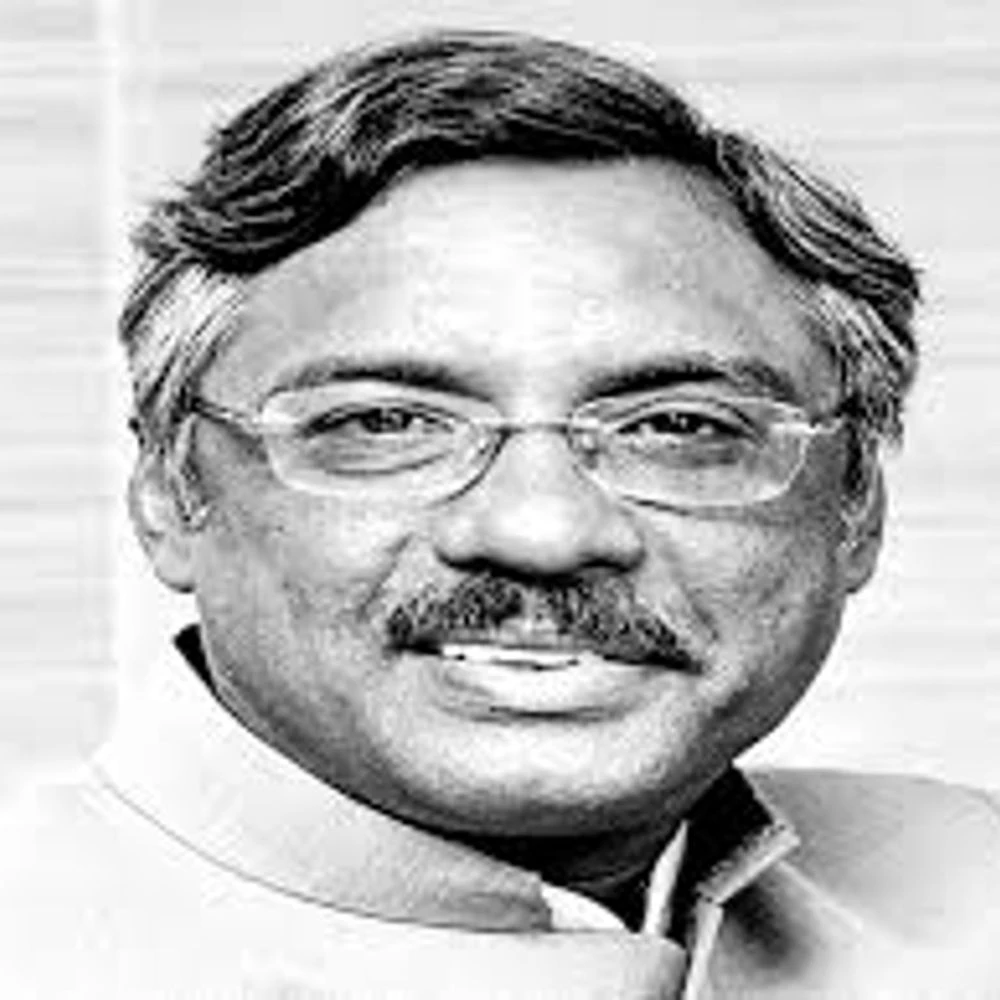
- Pawan K. Verma's column: Why should literature be evaluated through the prism of the West?
- Pt. Vijay Shankar Mehta's column: 'Growth' and 'Giving' go together this Diwali
- W, W, W, W... Indian bowler created history with 4 consecutive wickets, 'double hat-trick'.