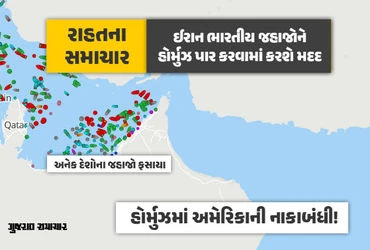
During a recent visit to Kerala, I noticed something strange. Many tea shops were closed in many cities. A local Malayali chaiwala said, "What do we do without LPG cylinders? We know that this crisis has happened due to the war in West Asia, we are not blaming anyone, but can't the government accept our problem?" Officially, all is well, but the ground reality is much more fragile. Tensions in West Asia have disrupted supply routes, especially in the Strait of Hormuz. This has increased freight and insurance costs. But there's also an important theme: global disruptions can trigger crises, but domestic policies dictate how much of an impact it will have. And this is where the government's 'All is Well' narrative seems hollow. Take LPG. Reaching millions of households with clean fuel is one of the most transformative and welfare achievements of the past decades. But what's the use, when it's not cheap? India still imports about 85% of its crude oil needs. LPG also has more than 60% dependence on imports. Whatever the reason is the surge in global prices, the impact is bound to reach Indian cooks. The Modi government has not been inactive either. It cut excise duty on fuel and made LPG consumption a priority. This brought some relief, but there is also a concern that the prices may not go up again after the assembly elections. However, this is only one aspect of the story. The real question is why the benefit was not passed on to the consumers when crude oil prices were low? On the contrary, taxes were raised so that consumers could continue to pay higher prices and the government treasury would be protected. This is the reason for the discontent that we see today. If our leaders step out of the VVIP aura, its effects are visible everywhere. The chaiwala in Kerala closes shop due to rising costs. A delivery worker in Chennai is spending more than capacity on fuel. The farmer is struggling with the rising prices of diesel and fertilizer. Daily wage workers are losing their livelihood. It shows how remote wars turn into domestic crises. Yet, the blame is placed on black marketing and profiteering by describing the supply as adequate in the responses. On the positive side, our good growth rate and relatively low inflation in the last decade have given us reason to be optimistic. But comprehensive stability is important only when the conditions on the ground are also better. There is a deeper strategic concern and more. India knows its dependence on imported energy, yet our steps towards real energy security have been inconsistent. China has strengthened its security through long-term agreements, strategic reserves, diversified sources and expansion in renewable energy. On the contrary, India appears to be more reactive than pre-prepared. It is true that energy transitions take time and India's developmental needs are also huge. That is why it is also necessary to take immediate steps. The first step is honesty. When governments say that the impact is limited, they are not benefiting themselves. Because when people's pockets are tight, they feel it — whether it's expensive cylinders, expensive travel expenses, or making it difficult to run small businesses. Acknowledging this reality is not a weakness, but the foundation of a credible policy. The second step is immediate relief. A transparent and rule-based framework on fuel is necessary so that consumers benefit when oil prices fall. There is also a need to reconsider LPG subsidy. Today, the pressure has spread to the lower middle class. In such a situation, short-term relief will not be enough. India has to make more serious efforts towards energy self-sufficiency. Renewable energy has to be adopted faster. The most important is to align energy policy with economic strategy, because energy is the basis of major economic sectors such as agriculture, industry and services. On the positive side, our good growth rate and relatively low inflation in the last decade have given us reason to be optimistic. But comprehensive stability is important only when the conditions on the ground are also better.
(These are the author's own views)

RSS News
Bhaskar
0 thoughts on “Rajdeep Sardesai's column: Serious efforts will have to be made towards energy self-sufficiency”
Leave a Reply
Your email address will not be published. Required fields are marked *



RECENT NEWS
- Rajdeep Sardesai's column: Serious efforts will have to be made towards energy self-sufficiency
- Morning News Brief: Blockade of Hormuz Strait begins, Pakistan objects to channel playing Asha Bhosle's song; BJP to win 32 seats in Navsari
- SRH vs RR Highlights: First Ishan Kishan beaten, then Praful Hinge and Saqib Hussain broke Rajasthan's arrogance, got the first defeat of the season
- Who is Praful Hinge? Who made history by taking 3 wickets in the first over of IPL; Learn everything about them
- South Movies BO: These three South films rained money at the box office, one collection crossed 70 crores