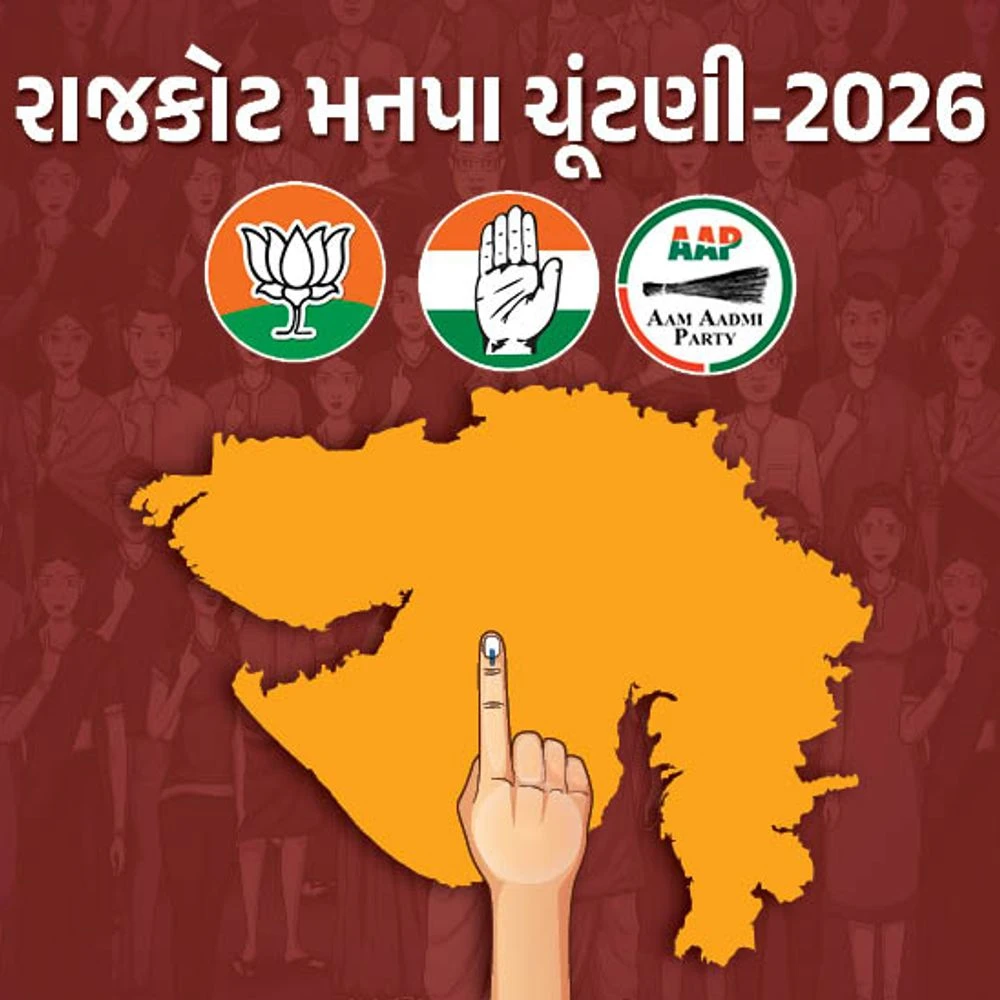
Local body elections have been held in the whole of Gujarat, including Rajkot. The polling will be held on April 26. Under this, major political parties like the Bharatiya Janata Party, the Congress and the Aam Aadmi Party have already started preparing their strategy to gain power in the municipal corporation. The Aam Aadmi Party (AAP) and the Congress have announced the names of some of its candidates, while the BJP is also expected to announce the names in a day or two. This year's election is going to be quite different from previous years, as the major changes made by the State Election Commission in the rotation of seats have shaken up the political equations. Political observers believe that these new changes will cut the cards of many veteran leaders and there is a possibility of increasing the strength of Bahubali and financially affluent candidates in the municipal corporation in the next term. Complex structure of rotation of seats and its implications
The rotation for 72 seats in 18 wards of Rajkot Municipal Corporation has been reshuffled for the 2026 general elections. Out of the city's 18 wards, only Ward No. There are only four wards — 3, 4, 13 and 17 — in which there has been no change in the seat structure. There has been a sweeping change in 56 seats in the remaining 14 wards. Specifically, 13 general seats have been abolished and reserved for Scheduled Castes (SC), Scheduled Tribes (ST) and Other Backward Classes (OBC). Those who have been holding on for years may have their turn to return home
Due to this change, even in the wards where the population of the upper castes is high, there is now less space for general category candidates. This could lead to the political 'thugs' who have been holding on to their seats for years, now it is their turn to gather at home. Observers believe that when seats are reserved, political parties prefer candidates who are dominant at the local level, be Bahubali or are financially able to meet the exorbitant cost of elections. As a result, new well-equipped faces can be seen in the municipal corporation instead of experienced politicians. Caste-wise ticket prospects and political analysis
Casteism has always been an important factor in the politics of Rajkot. Political observers have begun a deep math on how different societies will be represented after the new rotation. Looking at the possible distribution of 72 seats... Talking about women's reservation, out of the total 72 seats, 50% i.e. 36 seats are reserved for women, but looking at the combination of other categories, a total of 41 seats are reserved for women and the remaining 31 seats are reserved for general candidates. 3 out of 5 seats for Scheduled Castes, 1 for Scheduled Tribes and 4 out of 7 seats for Backward Classes will be reserved for women. Detailed description of wardwise changed equations
⇒ Ward No. 1. The number of white collar voters has increased in areas like Gandhigram. Earlier, the first seat here was reserved for Scheduled Castes, which is now reserved for backward caste candidates. More than 4000 votes from backward castes will play a crucial role in this ward. ⇒ Ward No. 2, 5, 6: The first seat in Ward 2 has been held from General to Scheduled Caste. The third seat in Ward 5 is now for the backward classes. There have also been two major changes in Ward 6, where the first seat has been allotted to a Scheduled Caste candidate and the third to a Backward Caste candidate. ⇒ Ward No. 7, 8, 9: In Ward 7, the first seat has been reserved for the Scheduled Castes and Backward Classes, while the third general seat has been reserved for the Scheduled Castes. The third seat in Ward 8 is reserved for the backward classes. In Ward 9, the first seat has been declared for Backward Classes and the third seat for Scheduled Castes. ⇒ Ward No. 10 to 12: In ward 10, one seat has been reserved for the backward class, while the third general seat has been allotted to the backward class. The third seat in Ward 11 has now gone to the backward castes. The first seat in Ward 12 is open for an ordinary candidate from the backward class. ⇒ Ward No. 14 to 18: The first seat in wards 14 and 15 belongs to the Scheduled Caste and Backward Classes. In Ward 16, the first seat is reserved for Backward Classes and the third seat is reserved for Scheduled Castes. In ward 18 also, the first seat is reserved for the backward and the third seat is reserved for the Scheduled Caste candidate. Decline in voter turnout, a new turning point
The results of the Voter Reform Program (SIR) conducted recently in Rajkot are shocking. Compared to the 2020 elections, the total number of voters in Rajkot has decreased by 1,08,039. This decline has been observed especially in areas from where migration has increased. This change in the number of voters will directly affect the margin of victory and defeat of the candidates. With fewer voters, the value of each vote has now increased, making the election campaign likely to become more aggressive. Why will the dominance of Baahubalis and affluent candidates increase?
Political observers analyse that established leaders lose their old seats when seats change frequently and new areas come under reservation. It also makes it difficult for parties to find a strong candidate in the new reserved wards. At such times, parties prefer local leaders who have both 'money and power'. Financially capable candidates are able to meet the election expenses, while Baahubali candidates can count votes on the strength of their local influence and fear. For this reason, there is a fear and possibility that the number of 'powerful' people will be more than the educated or experienced people in the board that will be formed in the next term. Congress-AAP trying to bridge the gap by taking advantage of the new rotation
The 2026 Rajkot Municipal Corporation elections are not just a battle for power, but a fight to survive between the changed rotation and new equations of casteism. The BJP will try its best to retain power, while the Congress and the Aam Aadmi Party will try to bridge the gap by taking advantage of the new rotation. This 'math' of city politics among the reservation system, female representation and dwindling voters will become more interesting in the coming days. Ultimately, the candidate who can properly balance the equations of arms, economic prosperity and caste will be the rulers of Rajkot.

RSS News
Divyabhaskar
0 thoughts on “The new rotation will bring drastic changes in the political arithmetic: Now the dominance of Bahubali and financially rich candidates is likely to increase, many veterans will be cut”
Leave a Reply
Your email address will not be published. Required fields are marked *


RECENT NEWS
- Ahmedabad News: 57 students suffer from food poisoning in Ahmedabad, 18 students are currently undergoing treatment
- The new rotation will bring drastic changes in the political arithmetic: Now the dominance of Bahubali and financially rich candidates is likely to increase, many veterans will be cut
- The rich heritage of ancient sports in Gujarat is also less expensive and therefore less interesting
- Vapi Municipal Corporation polls: BJP-Congress candidates for 52 seats in 13 wards discussed
- Man from Adawad befriended a girl on a dating app, lost more than Rs 56 lakh