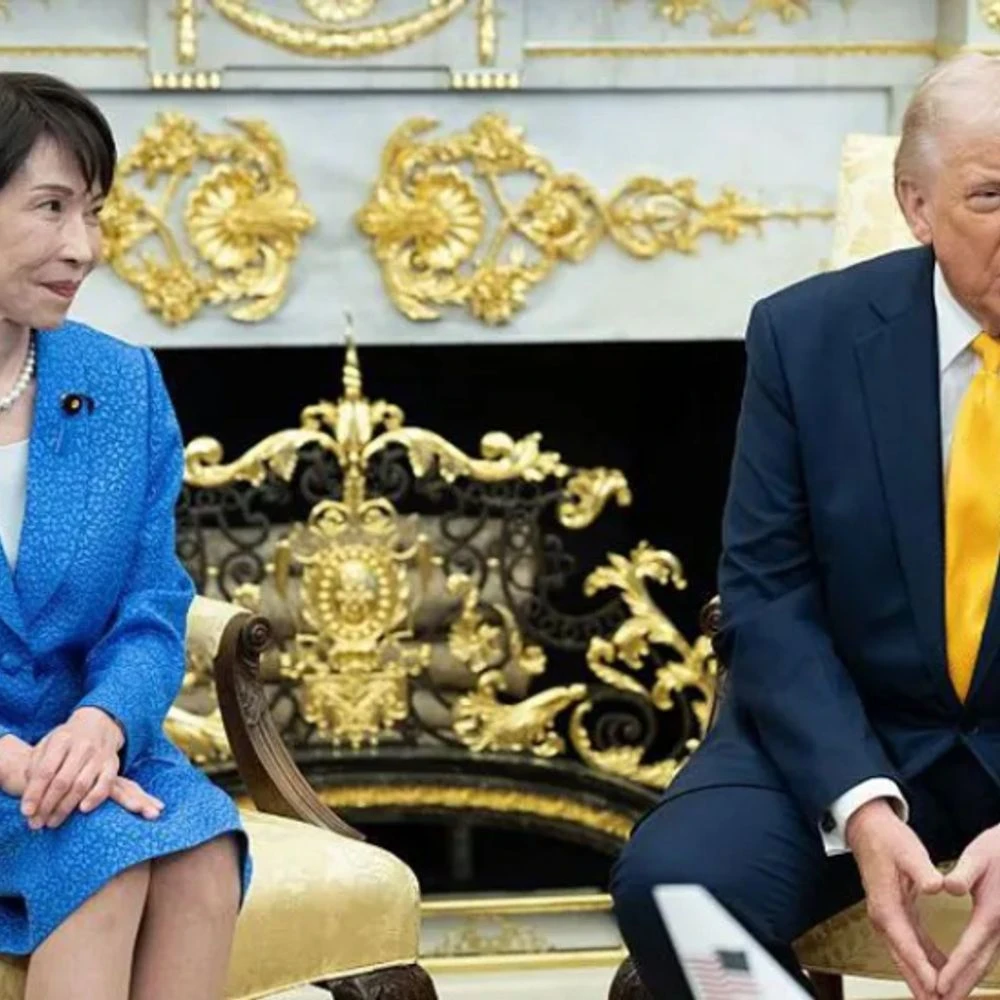
US President Donald Trump said that the United States has bought the Japanese yen for the first time in a decade. This has been done to bring the yen out of its 40-year low against the dollar. "Their currency was weakening and they wanted some help," Trump said. Know the full details in 10 Q&A Question 1: What and why are Japan and the United States currently taking action in the market? Answer: Last week, the Japanese currency 'yen' reached a level of 164 against the dollar, the lowest level in the last 40 years. Japan and the United States together intervened in the foreign exchange market to control this sharp decline. The main objective of this intervention was to curb the excessive volatility of the yen and curb currency speculators. In the last 15 years, that is, since 2011, this is the first time that Japan and the United States have stepped together in the currency market. Earlier, after the earthquake and tsunami in eastern Japan in 2011, the two countries took coordinated action to weaken the yen. This time the aim is to prevent the yen from falling too much. Question 2: How much money have both countries used for this intervention? A: Tokyo sold about $59 billion to buy the yen on the New York market on Thursday, just before Friday's official joint intervention, according to data from the Bank of Japan. The U.S. has not officially disclosed the amount it purchased, but a photo of U.S. Treasury Secretary Scott Besant during the Cabinet meeting said: "To Do: Buy Japanese Yen $5-10 bil." Question 3: What do US and Japanese officials have to say about this joint operation? Answer: Ministry of Finance of Japan: This joint action has succeeded in curbing the excessive volatility and uncontrolled movement of the yen in recent months. U.S. Treasury Secretary Scott Besant wrote in a social media post that this coordinated action has curbed the yen's uncontrolled move. The United States strongly supports Japan's fiscal and market measures to rectify the heavy devaluation of the yen. Speaking to reporters on Sunday, Trump said, "The Japanese currency was weakening and they wanted some help. We are always ready to help Japan." Question 4: What is the use of Japan helping the United States? Answer: Shigeto Nagai, head of Japan Economics at Oxford Economics, said the U.S. agreed to join the coordinated intervention because it was in its own national interest. If the sale in the yen and Japanese government bonds had continued, it would have had an impact on the global economy and could have raised the cost of borrowing for Washington as well. QUESTION 5: What is the immediate impact of this intervention on currency markets? A: The dollar fell 0.2% to 157.07 yen after US President Donald Trump's remarks, a much better position than last month's record low of 164. Question 6: What can be expected next? Will the two countries make similar interventions in the future as well? Answer: According to expert Shigeto Nagai, the two countries can continue to engage in a pause-of-ordinary and coordinated manner from time to time. Both Japan's finance ministry and the US Treasury secretary have made it clear that they will not hesitate to take action again if necessary. Question 7: Why did the Japanese yen reach a 40-year low? What are the reasons behind it? Answer: After the recession of the 1990s, Japan kept its interest rates at zero or negative for a long time to stimulate its economy. Japan raised interest rates in 2024, but they were still much lower than the world. Low interest rates led international investors to borrow in yen and invest it in high-yielding currencies. In addition, heavy foreign investment by Japanese companies and their foreign earnings staying abroad also weighed heavily on the yen. This pushed the yen to a 40-year low. Question 8: Did the US-Iran war also affect the yen's depreciation? Answer: Yes. The Iran war further accelerated the yen's depreciation. According to Keio University professor Sayuri Shirai, rising oil and gas prices upset Japan's trade balance due to its complete reliance on energy imports. This increased inflation and stalled the yen's recovery. Question 9: What were the gains and losses of a strong dollar and a weak yen? Answer: For the U.S.: A strong dollar makes U.S. exports more expensive for foreign consumers. It hurts American companies. For Japan: A weaker yen certainly benefits Japanese exporters and tourists, but imports of essential goods become expensive, leading to inflation in the country. QUESTION 10: Can this purchase permanently improve the yen position? Answer: Shusuke Yamada of Bank of America Securities believes that such purchases in the currency market provide only temporary relief. According to a report by Barclays Bank, the impact of this joint action will be visible in the early days, but in the long run, the downward pressure on the yen may continue.

RSS News
Divyabhaskar
0 thoughts on “US buys Japanese yen after 15 years, says Trump - Backing a weaker currency is better for the world”
Leave a Reply
Your email address will not be published. Required fields are marked *



RECENT NEWS
- US buys Japanese yen after 15 years, says Trump - Backing a weaker currency is better for the world
- ICC imposes 8-year ban on cricketer caught in match-fixing scandal
- Suicide bomber kills 14 at Pakistan anti-terror rally, injures 20 Shocking scenes
- Mountaineer Nirmal Purja's body among five recovered in horror Broad Peak avalanche tragedy
- 5 dead, 41 still missing; There were 271 passenger-crew on board; Deadly accident near Madura Island in Indonesia