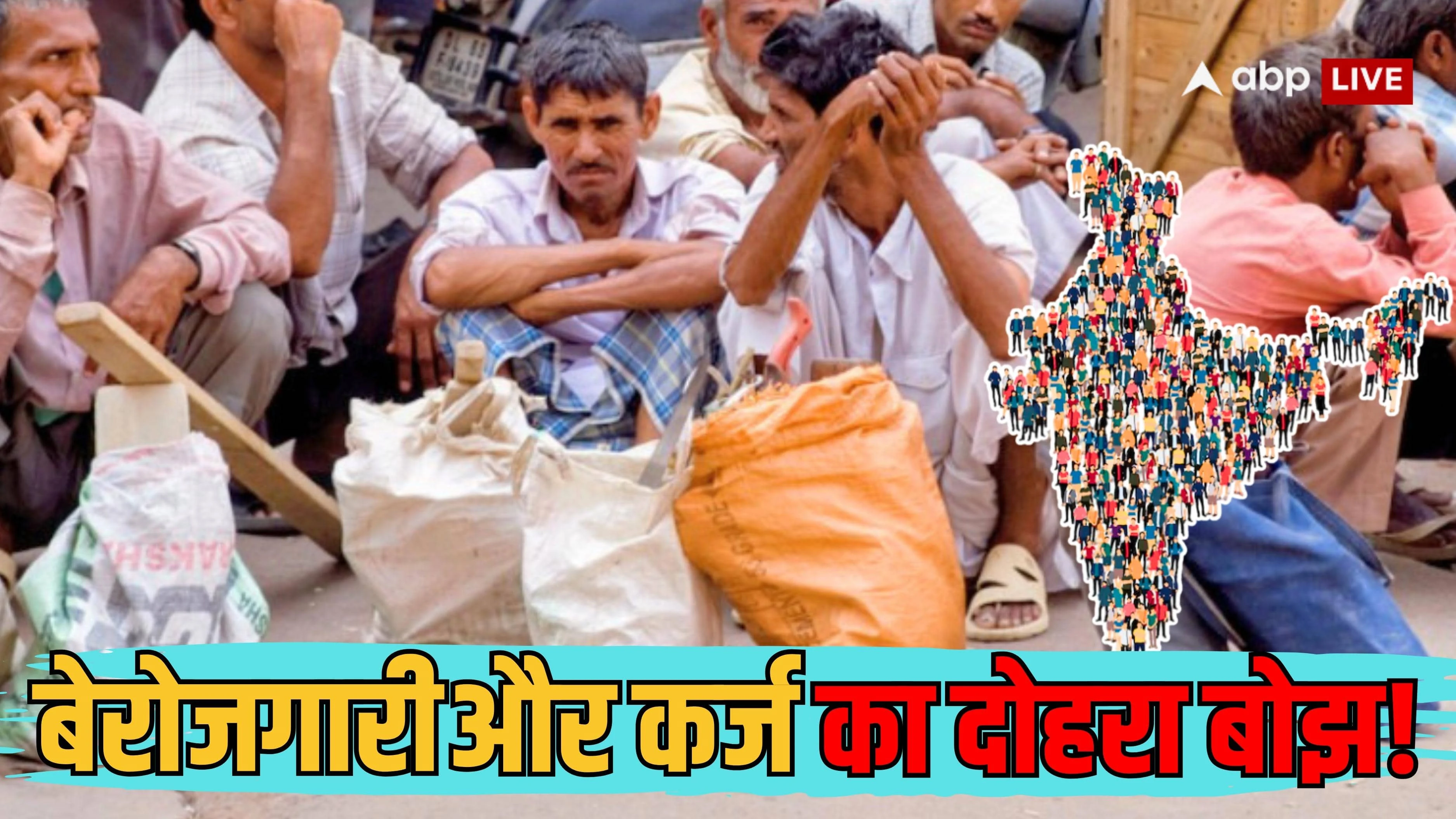
The common man in India is being hurt from two sides at this time. One is the crisis of jobs is deepening, while the other is that those who have work are falling into the debt trap. In May 2026, the country's unemployment rate reached 5.5 percent, which is the highest level in the last nearly one year. At the same time, household debt has reached a record level of 45.5 percent of GDP. This double whammy has now become a deep social crisis, not just an economic one. How did this crisis arise, what role are digital lending apps playing in it, and what are the ways to avoid it...
hit No. 1: Unemployment that shows no signs of stopping
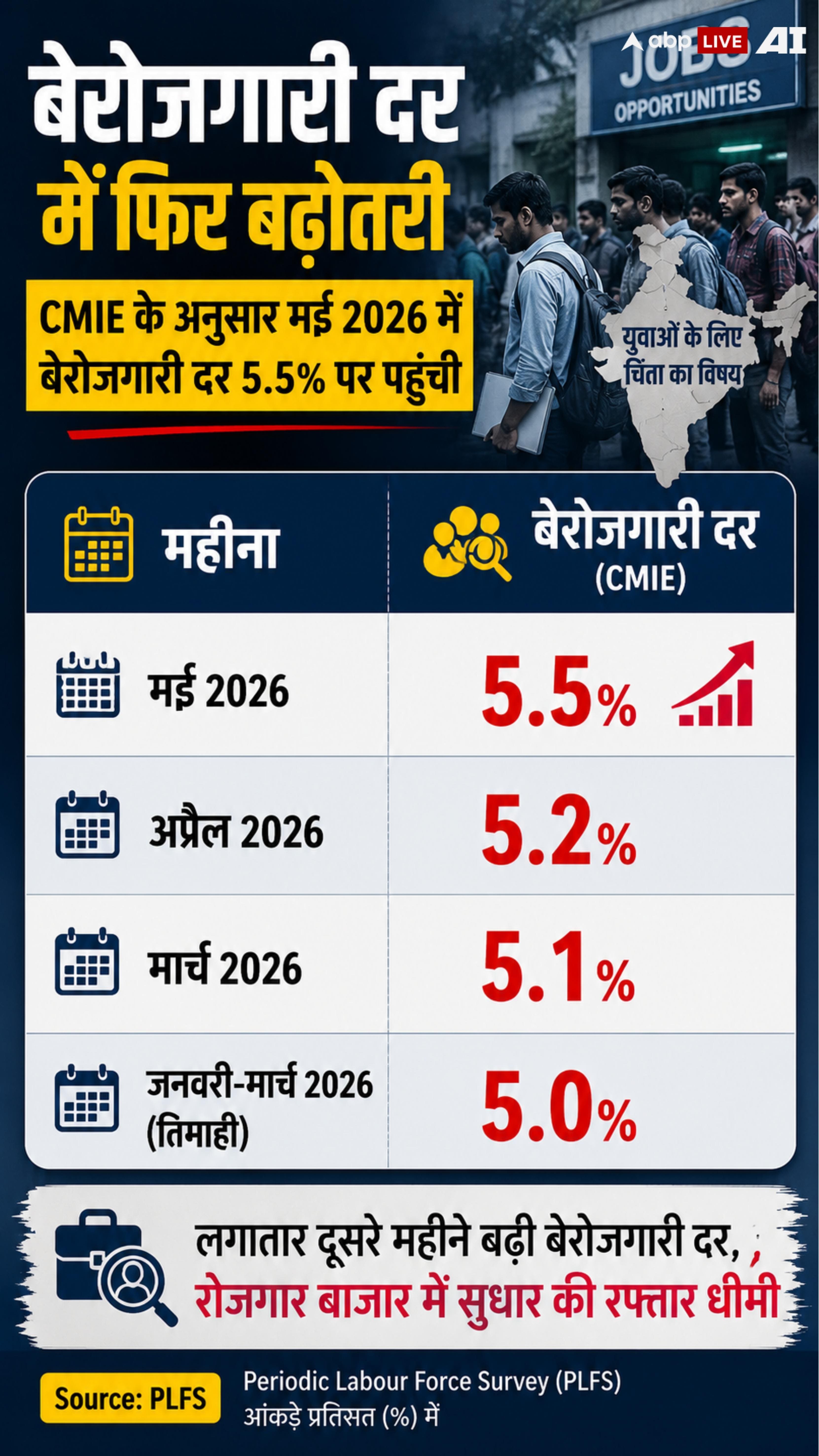
The condition of cities is much worse than in villages. The urban unemployment rate in April 2026 was 6.6 per cent, while in rural areas it was 4.6 per cent. The biggest hit is on the youth. The unemployment rate among educated youth in the age group of 15 to 24 years has crossed 45 percent, which shows that one in every two educated youth does not have work. Overall, the youth unemployment rate remains at 10.2%, which is almost double the national average.
hit No. 2: Household debt that hit record levels
Due to not getting a job or getting low salary, people are resorting to loans to meet their daily needs. According to the Reserve Bank of India's (RBI) Financial Stability Report released in June 2026, India's domestic debt increased to 45.5 percent of GDP by March 2026. That's well above its own five-year average of 42.9 percent.
Before the COVID-19 pandemic, this figure was 38 per cent, which means that household debt has increased by more than 7 per cent since the pandemic
Compared to other emerging countries, India ranks fourth in terms of household debt. This is lower than Thailand (87.3 per cent), Malaysia (69.9 per cent) and China (59 per cent), but the pace at which it is growing is worrying. Apart from this, the country's net financial savings rate has fallen from 7 percent in 2021 to just 5 percent in 2026. That is, people's earnings are decreasing and whatever little savings were also being depleted rapidly.
debt trap?
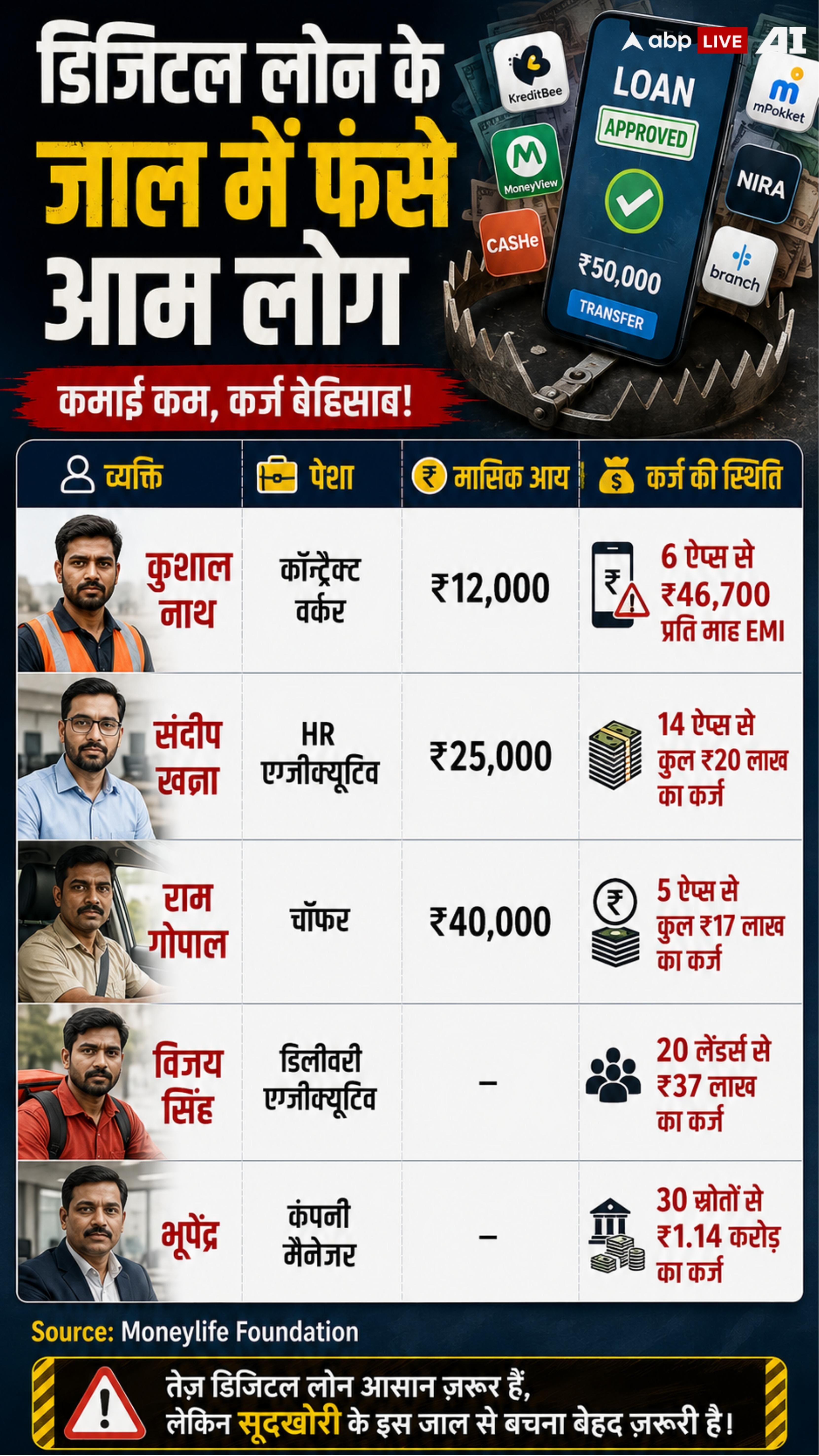
The most dangerous character in this whole crisis is digital lending apps, which have made low-income people their easiest prey. According to a Business Standard report, Indians have never been so in debt before and digital lenders are now issuing five out of every four personal loans. These apps target India's working class, including low-paid workers, contract workers, delivery executives and auto driver>s<.
The way these apps work is extremely aggressive and cunning. In FY25, fintech platforms alone disbursed more than 130 million small loans, with an average amount of just Rs 16,000. The lure of getting a loan in three clicks is so great that people do not read the terms carefully. The annual interest rate on these loans ranges from 36 to 40 per cent, but the real trick is hidden in the name of processing fee, which is charged from 10 to 15 per cent of the loan amount, that too before the loan is given.
MoneyLife Foundation conducted an in-depth study of 107 digital lending apps. Check out some of these examples:
Unemployment and Debt: How Do the Two Blows Reinforce Each Other?
This crisis of unemployment and debt is no different.
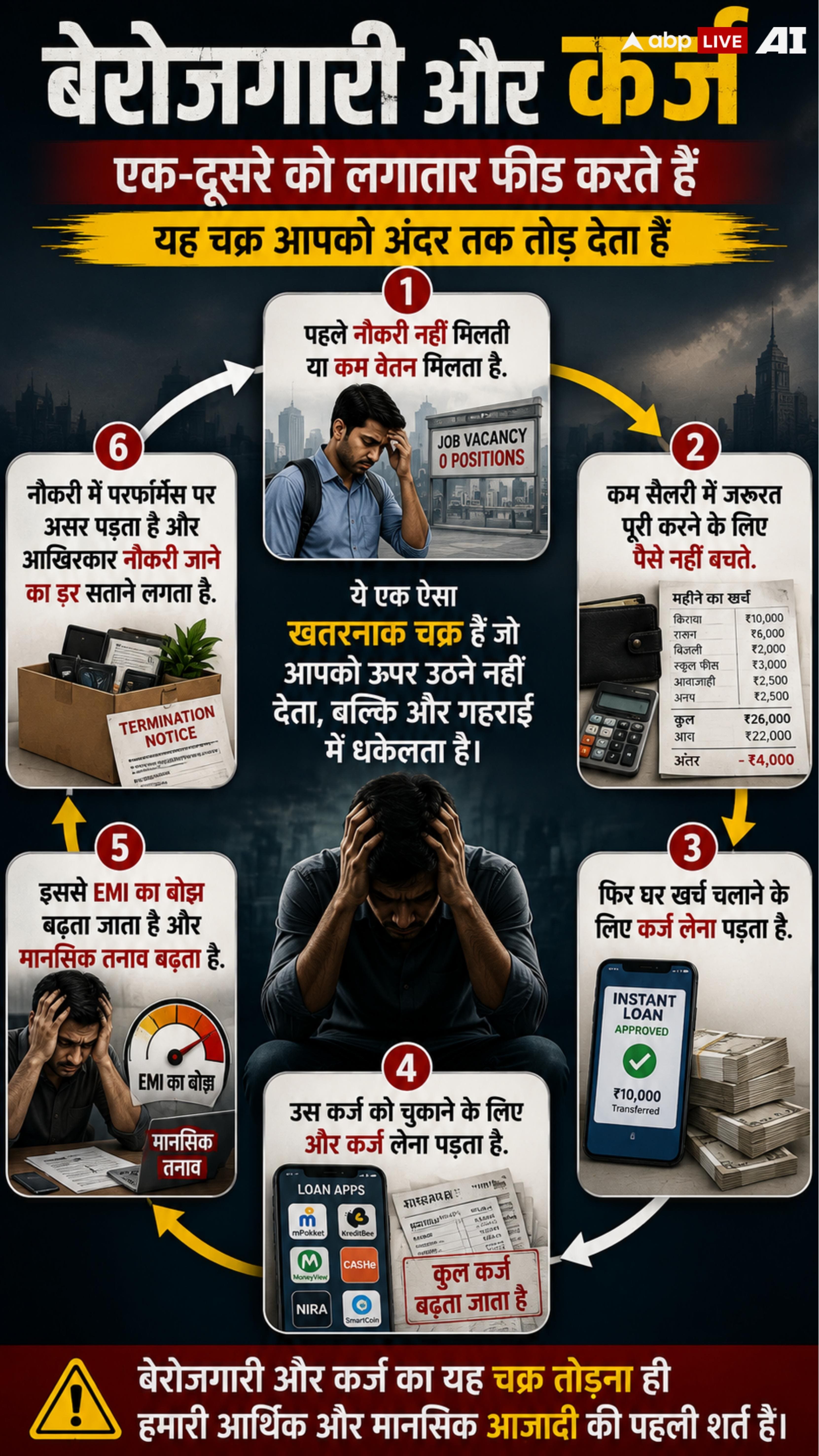
Economist Andy Mukherjee wrote in the Business Standard that even those who somehow find work are feeling a bitter despair as they sink deeper into the quagmire of debt with each passing month<>
There are salaried or informal sector workers in the age group of 26 to 45 years, who took a loan from a digital loan app for the first time due to a health emergency. Then he got completely trapped in the trap while taking several loans one after the other.
government and RBI doing?
RBI took a significant step in April 2024 by making it mandatory for all lenders to provide Key Facts Statement (KFS). In this, the interest rate, processing fee, late fee and all other charges have to be clearly stated. But at the grassroots level, this rule was not fully implemented. Even now, hundreds of apps are working without any fear. The government had issued notices to shut down 6 loan apps, but this is a step to heal the problem, while there are thousands of such apps in the market that are cheating people.
The Enforcement Directorate (ED) in a major action in February 2025 had frozen assets worth Rs 123.58 crore linked to the Rs 719 crore fake loan app network.
RBI's Financial Stability Report, the gross NPA of the banking sector is at a low level of just 1.8 percent, which means that banks are not incurring any major losses at the moment, but the pockets of the common man are continuously empty. Savings are completely gone.
What's the way to avoid this double whammy?
The government and RBI will now have to move beyond half-hearted steps and take tough decisions
- There should be clear rules on how many loans a person can take at a time and what will be the maximum limit of the interest rate
- There should be consistent and strict action against fake and vicious loan apps so that they do not rear<>
- Credit bureaus should also ensure that no person can borrow more than he can repay.

0 thoughts on “Xplane: 'Money is gone, I borrow', how is unemployment and debt double whammy in India?”
Leave a Reply
Your email address will not be published. Required fields are marked *



RECENT NEWS
- CWG: PM tells Mirabai Chanu, 'It seemed like gold medal was dripping from every drop of tears'
- Xplane: 'Money is gone, I borrow', how is unemployment and debt double whammy in India?
- N. Raghuraman's column: If you want to shine in the hospitality industry, bring 'style' to your work
- Morning News Brief: Mamata Banerjee's car attacked; PSC exams to be cancelled in Jharkhand; 6 youths killed in road accident on Ujjain highway
- 'Joroo Ka Ghulam' director Shakeel Noorani arrested for sexual harassment