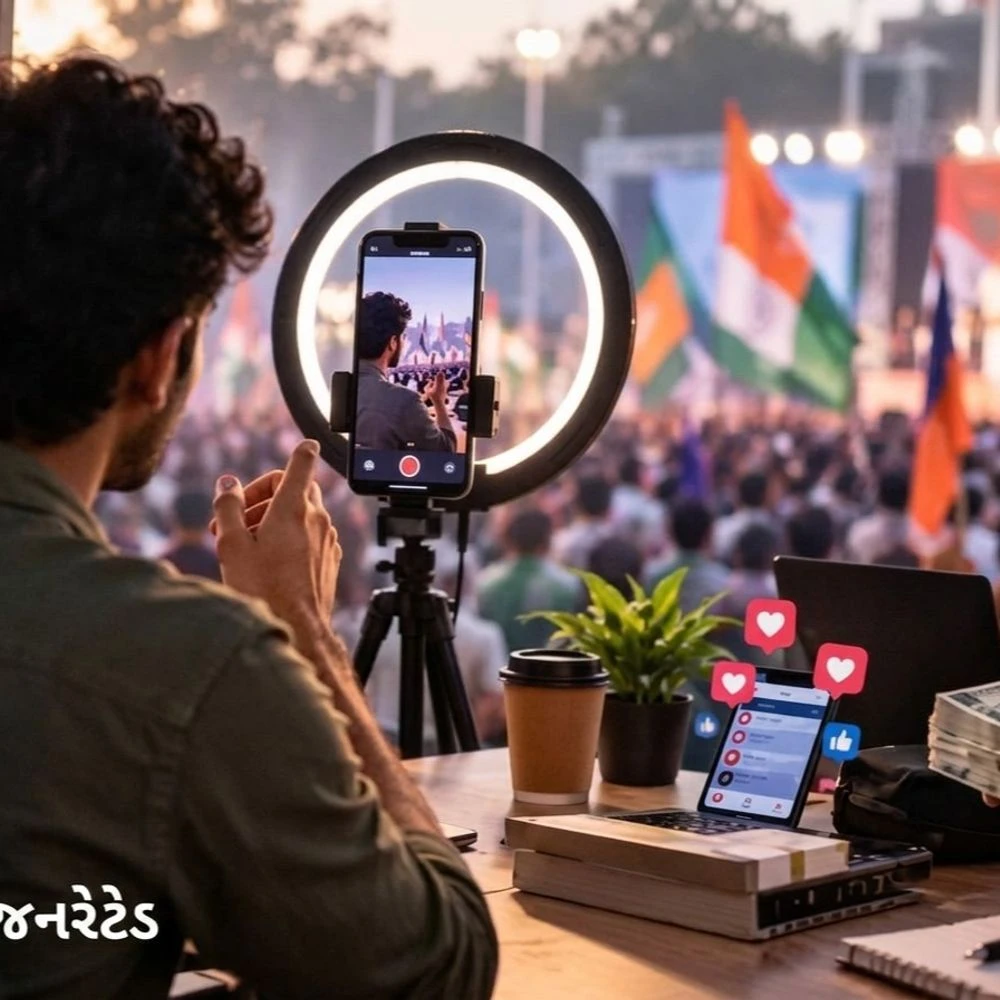
The old basis of the strength of political parties has been the organization and the workers. Now a 'digital army' of content creators and micro influencers is being created parallel to them. They neither have a party position nor a flag. But, they have access to thousands and millions of screens. Youth movements have shown its strength. Information, narratives and questions to the government are no longer relied upon just meetings, posters or press conferences. One reel, meme or short video can reach lakhs of youth in a few hours. Ahead of the assembly elections in UP, Punjab and Uttarakhand, parties are busy building a network of local influencers with 10 to 50 thousand followers. According to people associated with digital campaigns, small and medium influencers do not associate with any party permanently. They can work for BJP, Congress, AAP or other parties at different times. If there are more than 50 lakh subscribers, then you get 30 lakh rupees. For political reels, you get Rs 15 to 50 thousand. And for posts, Rs 15 to 20 thousand. There are claims that they are paid up. According to Shyam Tiwari, who runs a social media company, creators with subscribers up to Rs 5 lakh charge Rs 50,000 to Rs 1 lakh. A single content of a big creator with more than 50 lakh subscribers can reach Rs 30 lakh. More importantly, the rate card parties made by governments test the creator's social reach, ideology and even body language. A teacher, farmer, comedian with 15,000 followers can be more influential than a national celebrity somewhere. Podcasts are being used to create an Instagram influencer and an image of a leader for an instant narrative. There are claims that political payments are made in cash. The Election Commission regulates social media political advertisements and election expenditure. The ASCI guidelines also ask for clear information about advertisements. But, if a teacher praises the education policy, how will the viewer recognize that this is a paid propaganda? This will be a challenge for the voters in the elections to be held during 2027. Sudhanshu Bajpayee, who is associated with the Congress's Gen-Z Connect Yatra, says, "Reels can get more fame than the worker. But it is the job of the worker to bring the voter to the booth." Sonam Wangchuk's Ladakh campaign showed that digital support can land on the ground. After the 2024 hunger strike, 'Friends of Ladakh' events were held in at least 50 cities. But it is not necessary that every viral campaign turns into votes. Noor Sridhar, coordinator of 'Jago Karnataka', also considers the synergy of social media and booth-level management crucial.

RSS News
Divyabhaskar
0 thoughts on “Parties are building a network of influencers for election campaigns: Will campaign through Reels, ready to give Rs 30 lakh; UP, Uttarakhand, Punjab to go to polls next year”
Leave a Reply
Your email address will not be published. Required fields are marked *


RECENT NEWS
- Claim: 14 MLAs of Shiv Sena Thackeray faction in touch with Ekanath: Shiv Sena leader - Operation Tiger-4 soon; 6 of Uddhav's MPs joined Shinde group
- Abu Dhabi-bound Air India Express flight turns back to Kochi after engine oil drops mid-air rapidly
- Suspicious drones spotted at Amritsar airport: Spotted hovering near runway, 7 flights diverted; Security agencies on alert
- Floods in 12 districts of Bihar, 23 lakh people affected: Fire station in UP's Bareilly flooded; Schools closed in 3 districts of Uttarakhand
- Delhi tragedy: 5 officials including MCD deputy commissioner suspended: Lookout notice issued against building owner; One more body found in debris, 7 dead