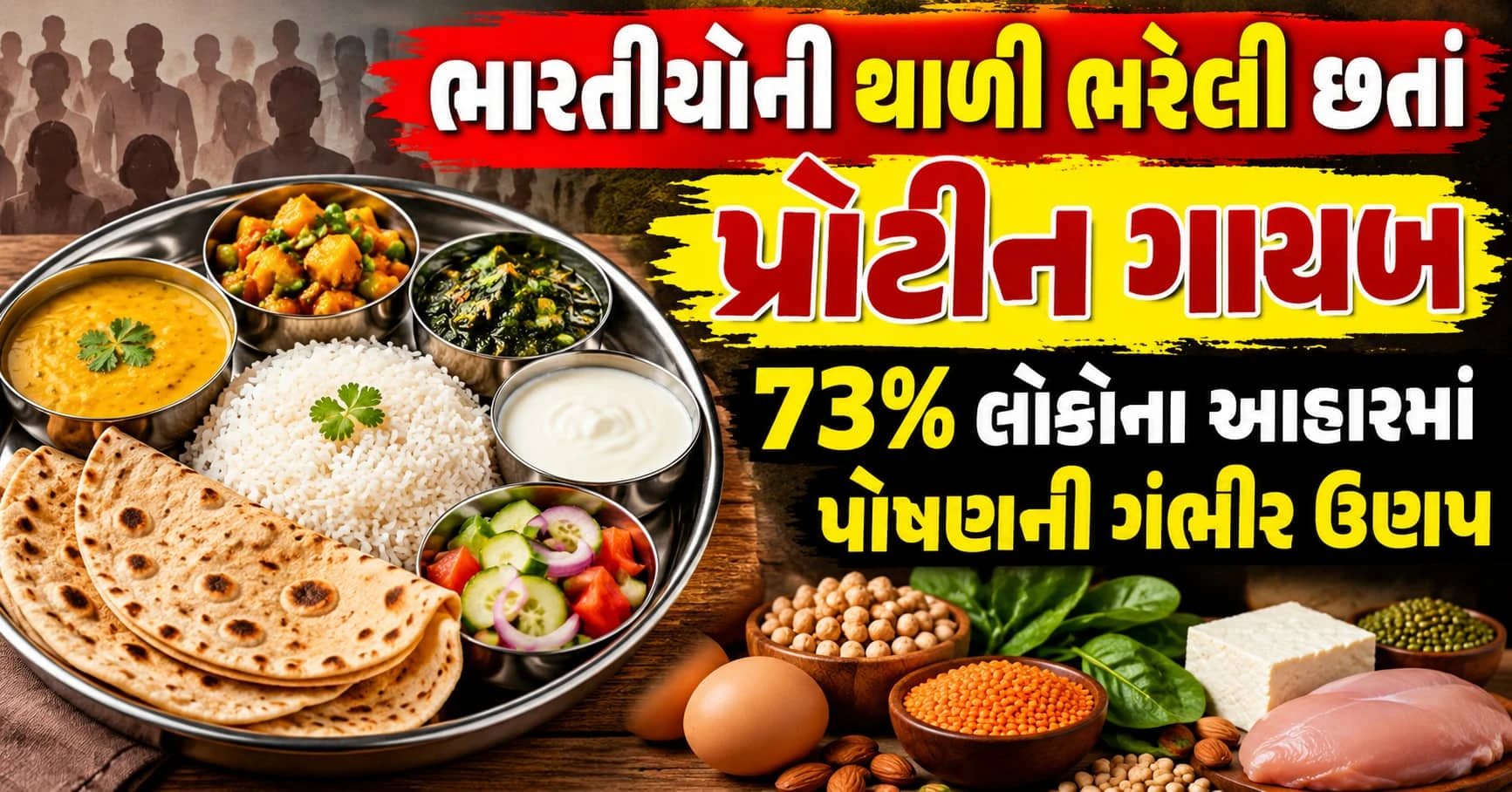
protein deficiency in India: Traditional foods like dal, rice, roti, vegetables and milk have long been an integral part of our daily diet in the Indian kitchen. We generally believe that eating a plate full provides adequate nourishment to the body. But the reality is different. A recent detailed report titled "State of Protein and Fiber in Urban India" has made a shocking revelation. This report shows that a large population of our country is still unable to meet their basic daily protein requirements. According to the report, about 73 percent of people in India do not get enough protein from their daily diet. This simply means that the food we eat is limited to filling our stomachs, but it lacks the nutritional value required for proper and healthy development of the body
PepsiCo and IIMR joint study
This important study was conducted by PepsiCo India and Euromonitor International in collaboration with the Indian Institute of Millet Research (IIMR). The survey was conducted in 5 major metros of the country — Delhi, Mumbai, Bengaluru, Kolkata and Kochi, in which urban lifestyle and food habits were closely analysed.
protein deficiency is a major challenge in urban areas
It is generally believed that people living in cities will get better nutrition, but as per the report, 44 per cent people in urban areas and 36 per cent in rural areas are failing to meet their daily protein needs. This disparity makes it clear that the problem is not only the availability of food, but also the choice of food, rising costs, lack of nutrition awareness and changing daily habits. Maintaining nutritious food has become a major challenge due to the increasing trend of fast-food (take-out) and ready-to-eat options, especially in cities
The survey revealed that a large number of urban dwellers consume less than 41 grams of protein per day. 60 per cent of the respondents believed that protein-rich foods are very expensive in the market, while 57 per cent cited lack of convenient and fast options in the midst of hectic lifestyles. This shows that people understand the importance of protein but lack guidance on how to incorporate it easily and inexpensively into their daily diet
Expensive protein options are not needed, the kitchen is a treasure
According toexperts, there is no need to find or buy expensive powders or specialty food products from the market to meet the protein deficiency in the body. There are already many such cheap and excellent options in our Indian kitchens, which can be easily overcome if they are included in the diet with a little precaution. Pulses like moong, gram, rajma, soybean and dry fruits like milk, curd, paneer, eggs, fish and almonds-walnuts are wonderful sources of protein. Various pulses, soya and milk products can prove to be the ideal and best option for vegetarian families. Mixing pulses with regular cereals can significantly increase the amount of protein in the diet
Serious threat to children's nutrition and future
The most worrying aspect of this report relates to children's health. The report states that 1 out of every 3 children under five years of age in the country is malnourished. About 35 per cent of children are found underweight in proportion to their age, while 32 per cent have stunted physical development. If not adequately nutrition is not received at this crucial stage of childhood, it has a negative impact not only on their present health but also on their future physical development, mental and learning ability. Therefore, it is very important for parents to pay special attention to the quality of food in their children's meals rather than the quantity of food.
millets and coarse grains can strengthen the plate
The report highlights millets and other millets as an effective and useful option to make the diet more balanced. Cereals like jowar, bajra, and ragi are rich in fibre and numerous nutrients required by the body. Eating these grains in combination with dal, milk, yogurt, eggs or other protein-rich foods makes the daily diet more balanced. This simply means that you don't need to completely change your habits to increase the protein on your plate, but just add a few nutrients to it.

0 thoughts on “73% of Indians have severe malnutrition in their diet”
Leave a Reply
Your email address will not be published. Required fields are marked *



RECENT NEWS
- Vadodara News: Reckless driving or traffic negligence? 14 accidents in 24 hours scare pedestrians
- A man was caught with MD drugs: Renting a taxi passing car, searching for an accused named 'Biradar' who supplied drugs from Ankleshwar
- Man snatched Rs 15.50 from doctor, contacted him through WhatsApp and gave him a receipt of Rs 50,000, became a college official in a hotel in Hyderabad and switched off his phone.
- Two boats caught for illegal light fishing: 40-50 clusters of LED lights found in Jaleshwar sea in Veraval, offences registered against the owners
- Amreli police arrest 3 accused in attack on forest worker in lion darshan dispute