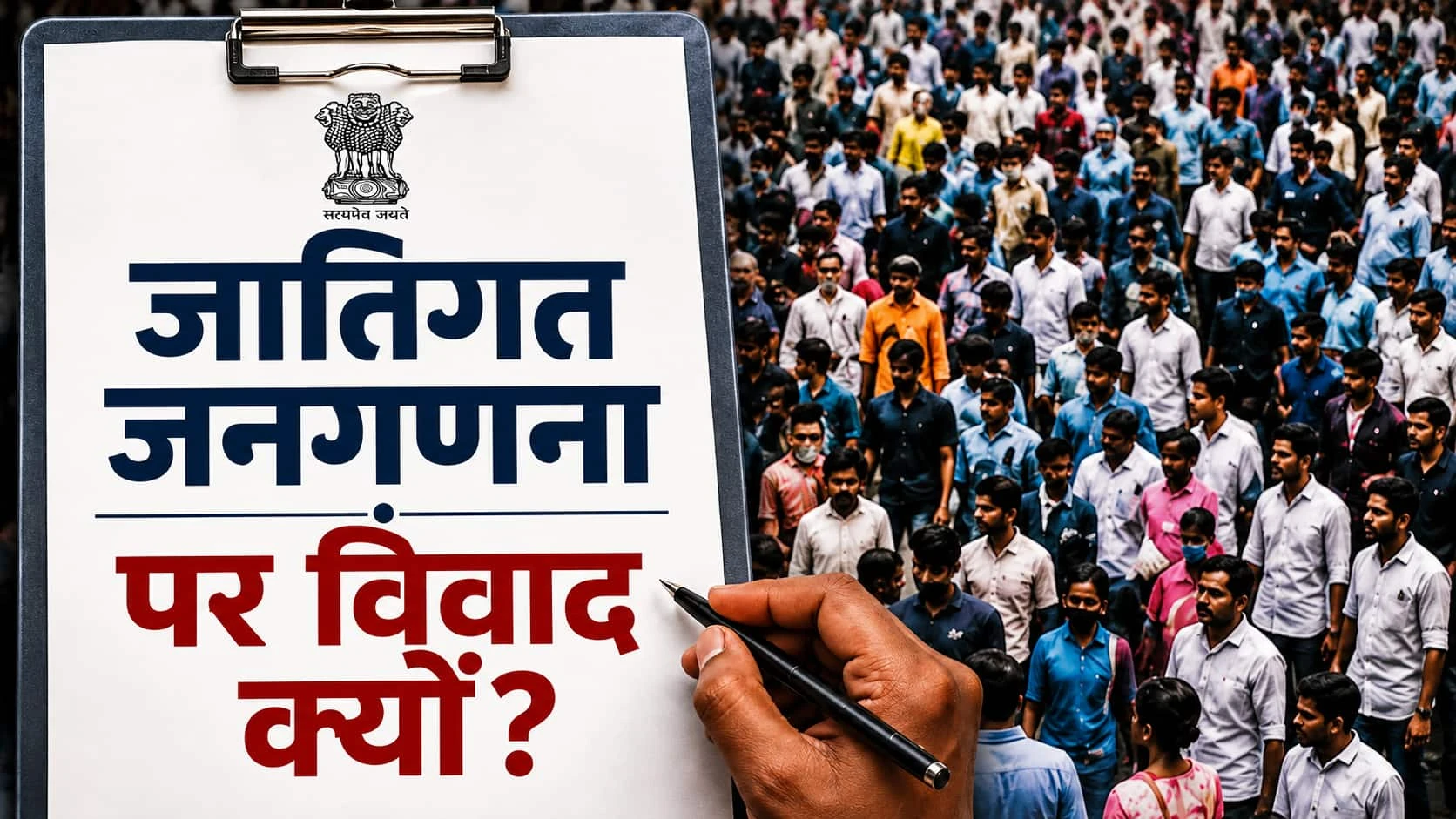
The second phase of Census-2027 will start from the 17th of this month. According to reports, any citizen of India who registers his caste will be registered in the same form. No caste certificate or any other document will be asked from anyone for this
There are many controversies about the caste census. The main controversy revolves around the demand for an expansion of the scope of reservation, political gains and losses and fears of deepening social divisions. Let's understand all the aspects related to this issue one by one.
What is the Varna system in India?
The caste system evolved from these varnas. Although initially caste was determined on the basis of the work (profession) of the individual, over time this system became hereditary. The caste in which a person is born thereafter becomes his permanent social identity and it is almost impossible to change it.
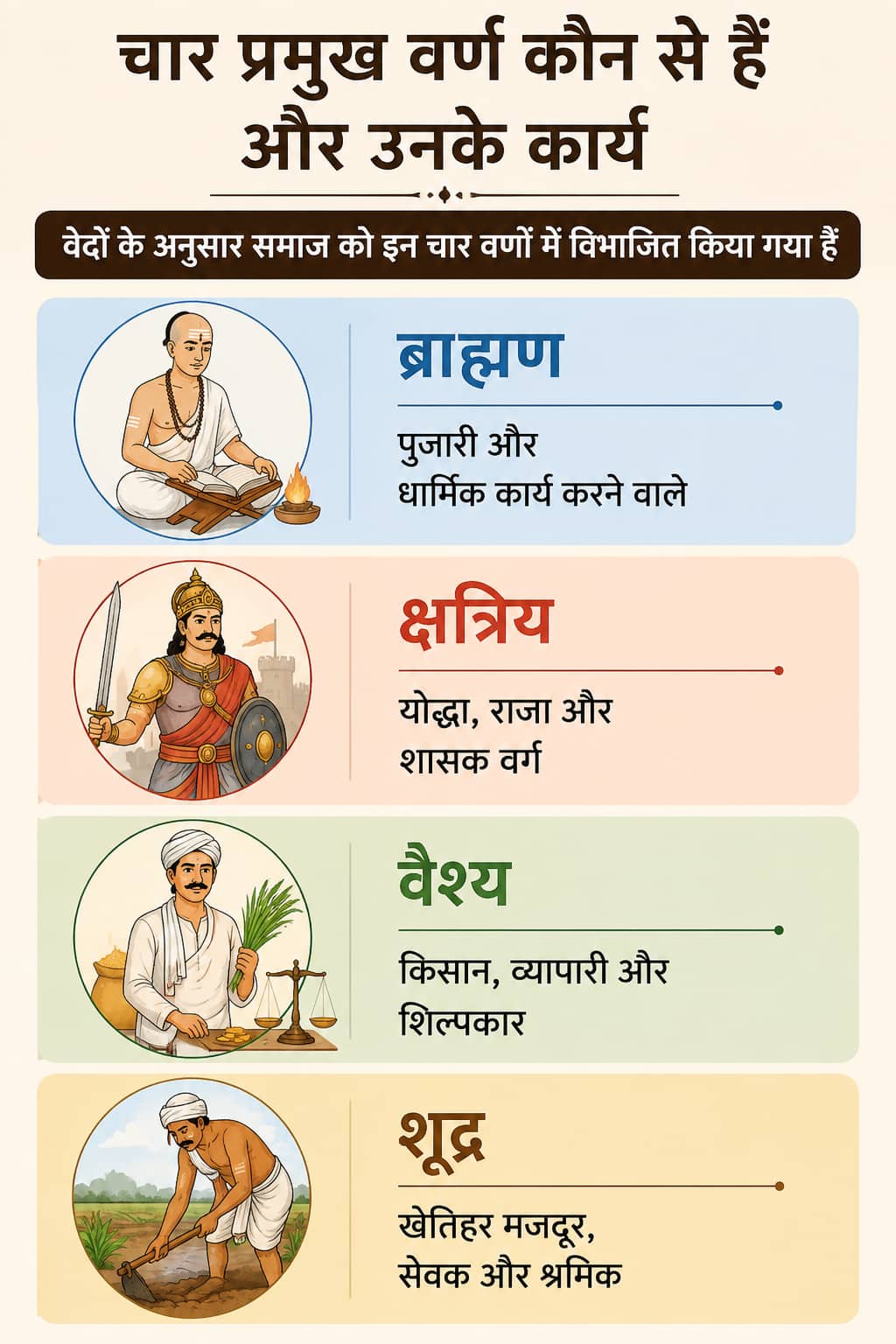
four major characters and their function mentioned
According to the Vedas, society is divided into these four varnas
brahmin- priests and religious performers
kshatriya- warriors, kings and ruling classes
vaishya- peasants, merchants and craftsmen
shudras- agricultural labourers, Servants and Workers
thousands of races and subspecies
Apart from the four main characters, there are many other castes such as
Bhumihar – lord of the land (landlord)
Kayastha – Writer, clerical and administrative community
Rajput – The major warrior community of North India, considered to be part of the Kshatriya class
garudi – snake catcher or snake game
snake – Extracting gold from river sand
so how many castes are there in India?
According to sociological studies, there are about 3,000 in India. There are 4,000 major castes and more than 25,000 sub-castes. According to the People of India project (Anthropological Survey of India), more than 4,600 communities have been recorded in India. These include many castes, sub-castes and tribes.
The 1931 census was the last census to record detailed details of all castes. Thereafter, all castes except Scheduled Castes (SC) and Scheduled Tribes (ST) were not enumerated separately in the general census.
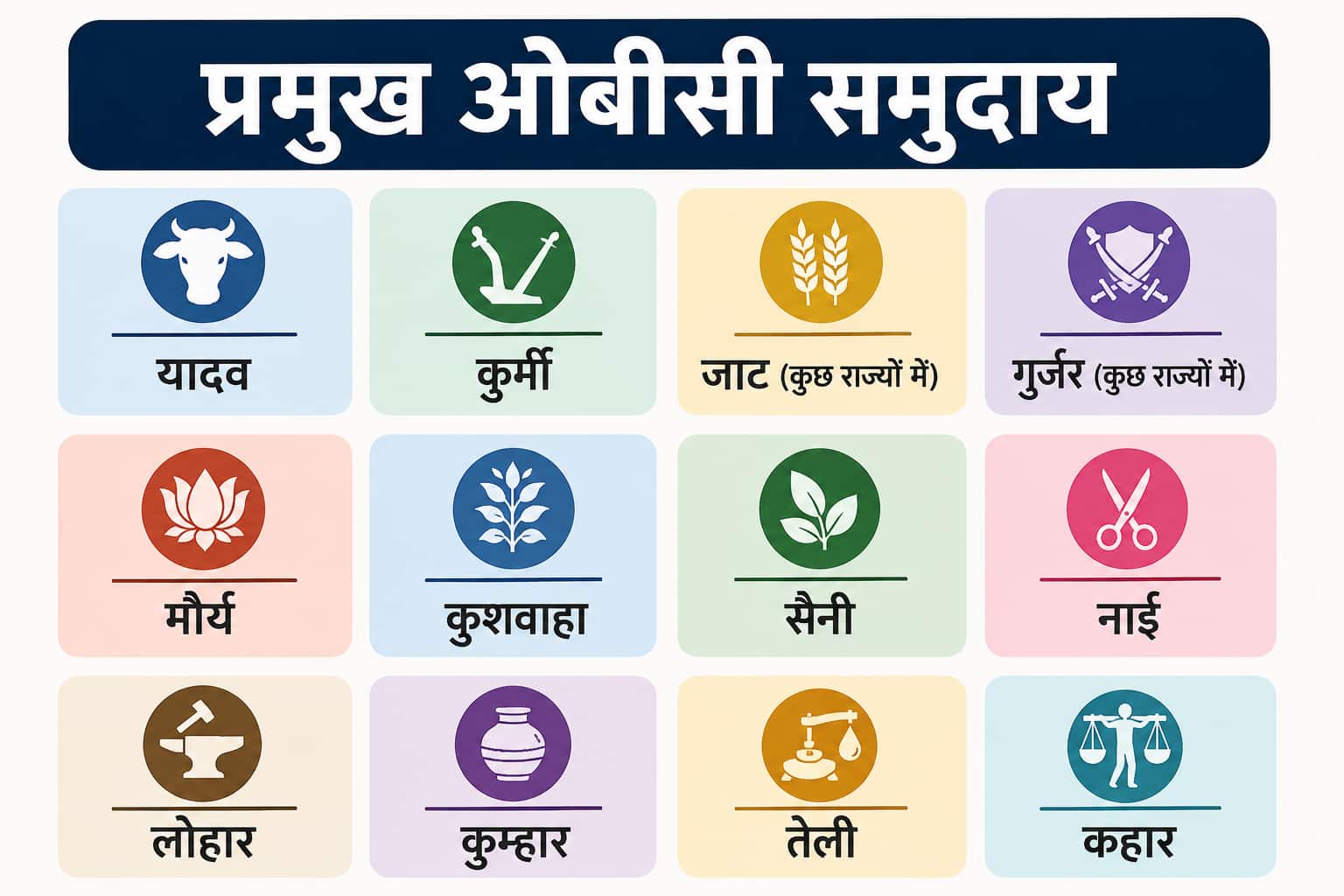
The biggest issue in the caste census this time is about the number of OBCs. The aim of social justice under the Indian Constitution identified communities that had historically lagged behind in education, employment and social opportunities. They were placed in the OBC (Other Backward Classes) category.
The list of OBCs may vary from Centre to state. Some of the major OBC communities are: Yadavs, Kurmis, Jats (in some states), Gujjars (in some states), Mauryas, Kushwaha, Saini, barbers, blacksmiths, potters, Teli, Kahars, Mallahs etc
caste census?
After the caste census, the official data of the actual population of OBCs along with all castes will also be revealed. If their population turns out to be higher than expected, some political parties may demand an increase of 27 per cent reservation.
-Many states in India have a large number of OBC voters. If their actual population figures are revealed, political parties can make changes in the selection of candidates, election strategy and manifesto.
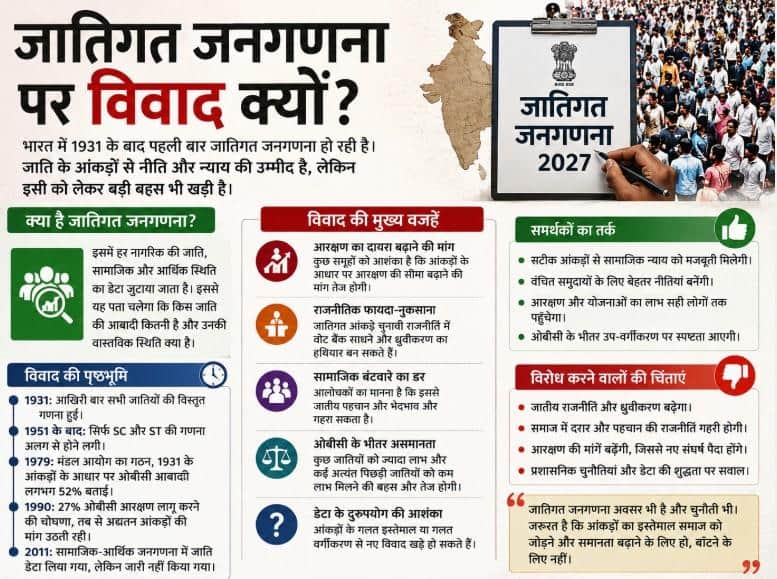
-OBCs are not a homogenous group. It involves hundreds of castes. There has long been a debate that some of the stronger OBC castes have benefited more from reservation, while the most backward castes have been left behind. The caste census data may give a new ground to this debate and the demand for sub-categorisation of OBCs may intensify
When did this dispute intensify?
In 1979, the Mandal Commission was constituted. The Commission identified socially and educationally backward classes and estimated on the basis of the 1931 census that the OBCs constitute about 52 per cent of the population.
In 1990, on the basis of the recommendations of the Mandal Commission, the central government announced the implementation of 27 per cent OBC reservation><.
2027 caste census?
Is the actual population of OBCs different from the 1931 estimates?
Should there be a change in the present system of reservation?
Should there be a sub-categorisation within the OBCs?
Should the distribution of government schemes and resources be done on the basis of new data?
Two sides on this issue
caste census
This is why Caste Census is not just a matter of data collection, but it has become an important issue related to social justice, reservation, policy making and Indian politics.

0 thoughts on “Xplane: What is a caste census and why is there so much controversy about it?”
Leave a Reply
Your email address will not be published. Required fields are marked *


RECENT NEWS
- VVS Laxman will be the new chief selector of Team India. Ajit Agarkar to be discharged
- Xplane: What is a caste census and why is there so much controversy about it?
- Dr. Chandrakant Laharia's column: Over-testing and medicines are also a disease in themselves
- N. Raghuraman's column: Using bots as social buffers is an epidemic of 'self-mistrust'.
- Morning News Brief: Rahul Gandhi says RSS is trying to change history: Comments on Tamil Nadu CM's friend; Stalin arrested, police station push for passport now stopped