Jai Narmada Maa!
The much-awaited commencement of the northward-flowing Panchkoshi Narmada Parikrama (Mother Narmada Parikrama), which holds a revered place in India’s most sacred and historic religious traditions, began on March 19 and will continue until April 17. Every year, thousands of devotees participate in this spiritual pilgrimage to seek the blessings of Mother Narmada. This year as well, lakhs of devotees from across the country have gathered to take part in this holy journey, which is conducted between Rampura and Tilakwada in Narmada district.
In Hindu scriptures, the Narmada River holds immense religious significance—there is a belief that while bathing in the Ganga and merely beholding the Yamuna purifies a person, the mere sight of the Narmada is enough to sanctify one’s soul. The number of devotees participating in the parikrama has steadily increased in recent years—over 400,000 devotees took part in 2024, while more than 1 million pilgrims joined last year.
The Government of Gujarat has claimed improvements in facilities for pilgrims this year, with an estimated expenditure of around ₹30 crore, including approximately ₹20 crore in budget allocation and ₹10 crore in event-related costs. However, serious questions have emerged regarding this grand pilgrimage, which ideally should remain centered on devotion and spirituality:
Have the facilities truly reached world-class standards, or is publicity and political image-building being prioritized over devotion?
Historical and Spiritual Significance of the Narmada Parikrama
In Indian culture, the Narmada River is not merely a river but is revered as a living goddess, a sacred land of penance, and an eternal symbol of faith. Ancient scriptures accord the Narmada even greater distinction than the Ganga, based on the belief that the spiritual merit gained from bathing in the Ganga can be attained simply by the दर्शन (darshan) of the Narmada.
The Narmada Parikrama is a centuries-old tradition in which saints, ascetics, and ordinary devotees undertake a foot pilgrimage along both banks of the river. This journey is not merely a religious ritual—it is a profound quest for self-realization, involving renunciation, discipline, service, spiritual practice, and reverence for nature.
Increased Spending, Yet Persistent Concerns About Basic Facilities
Last year (2025), the Gujarat government spent approximately ₹2.6 crore on the parikrama. This year, that expenditure has reportedly surged dramatically to around ₹30 crore—an increase of nearly 10 to 15 times. The government claims this spending aims to provide better facilities, smoother arrangements, and world-class infrastructure for devotees.
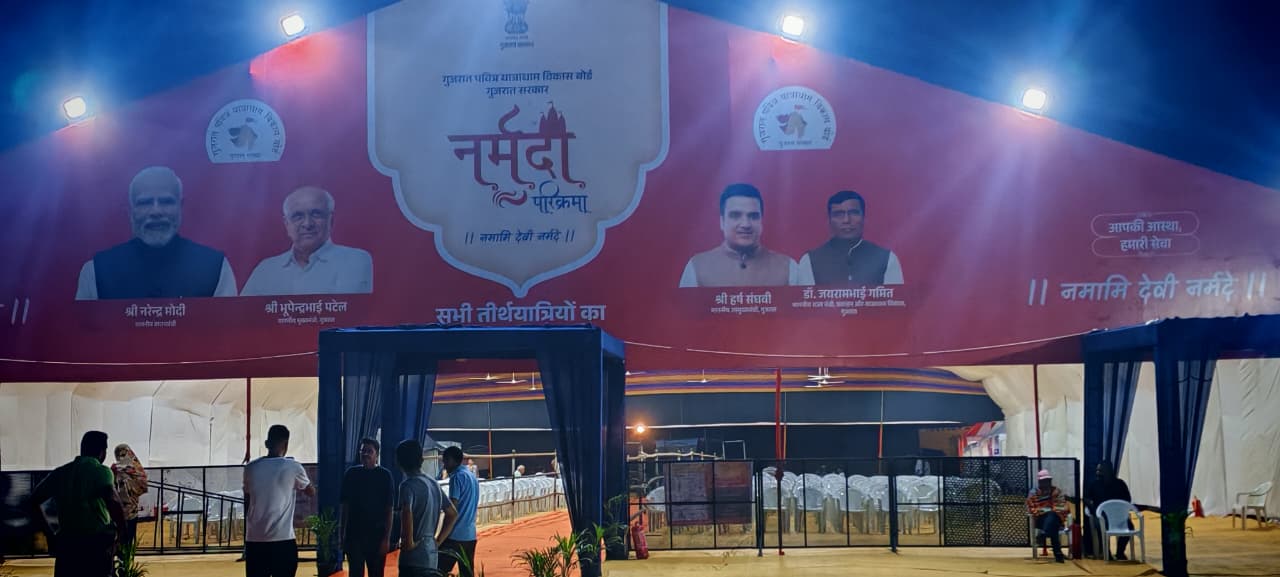
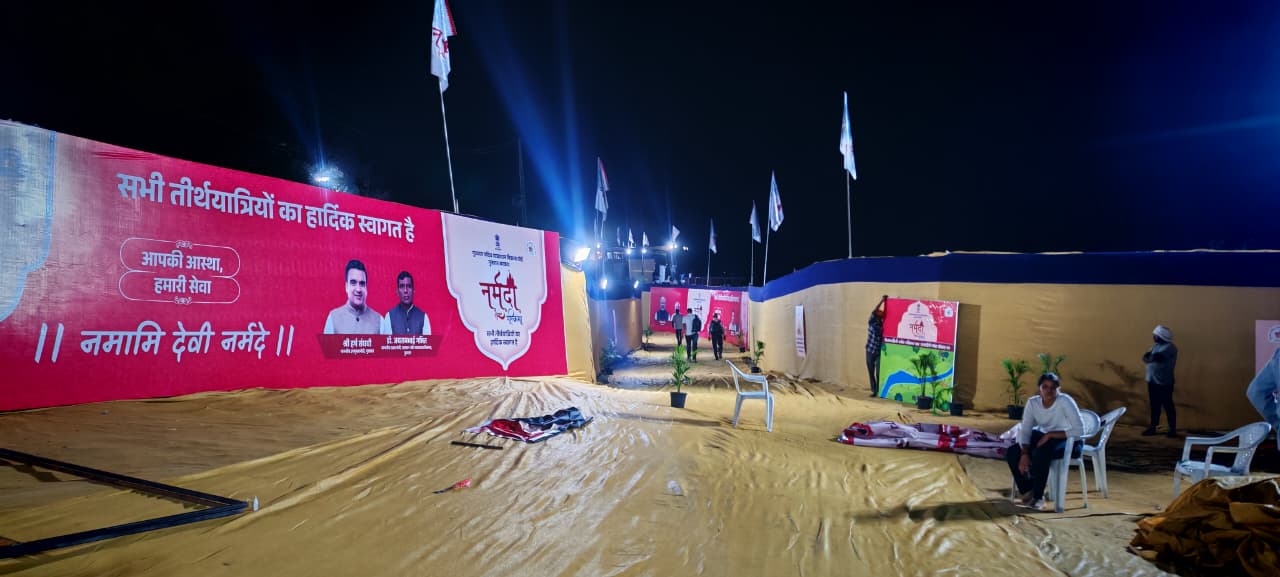
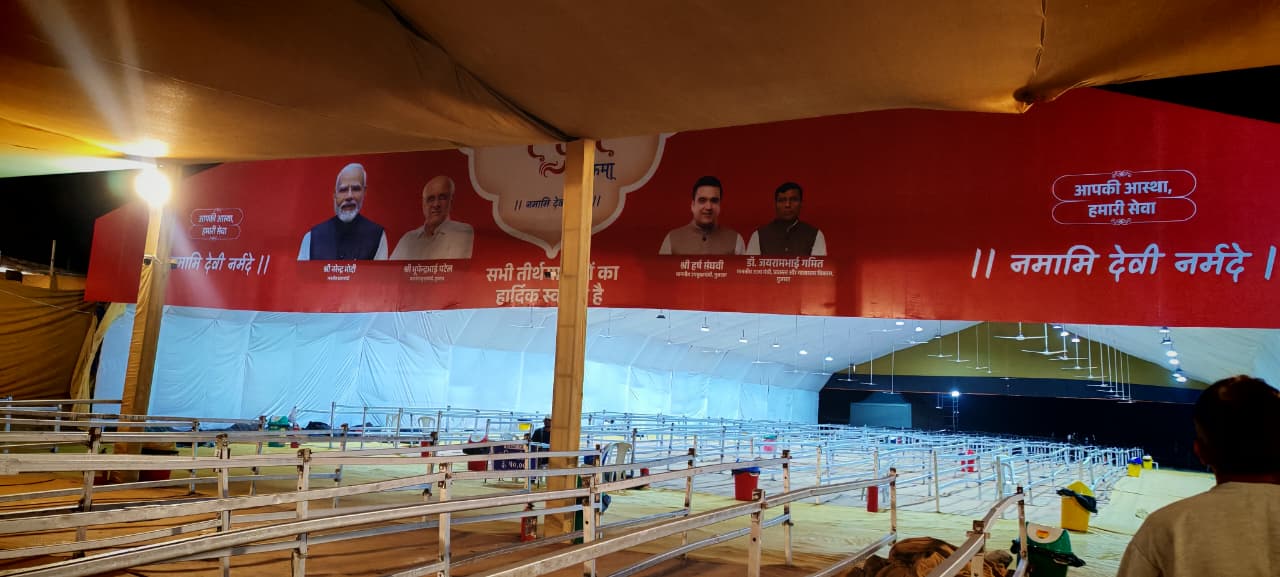
However, according to several pilgrims and local sources, even basic necessities such as adequate lighting were lacking. Particularly along the Tilakwada parikrama route, there were widespread complaints about insufficient lighting. Reports indicate that many devotees had to rely on mobile phone flashlights while walking at night.
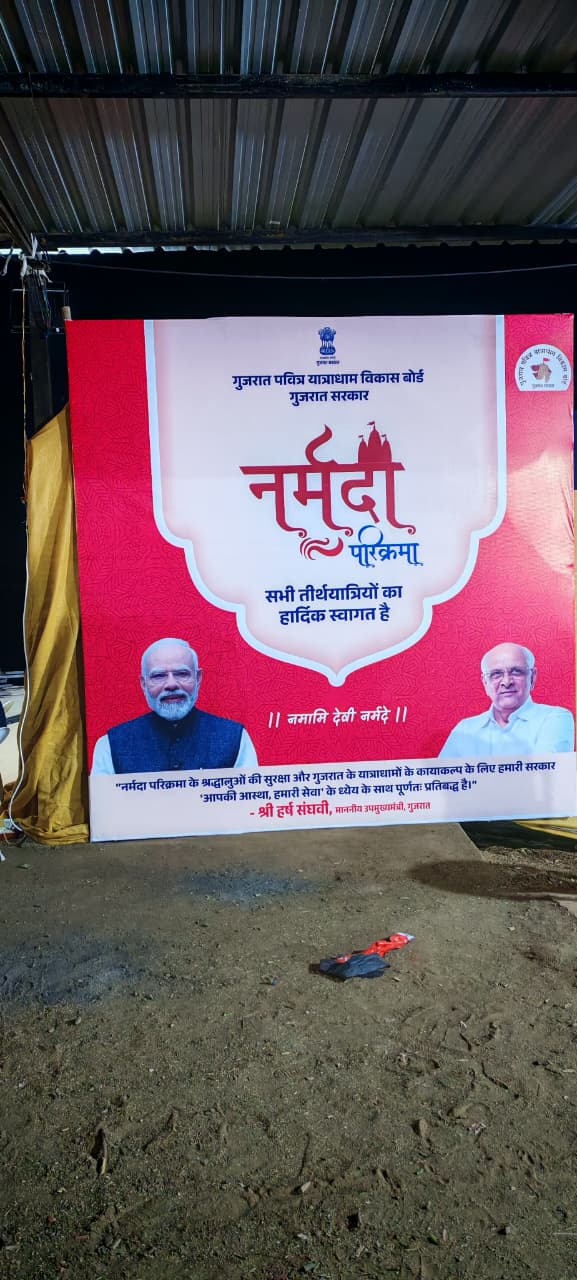
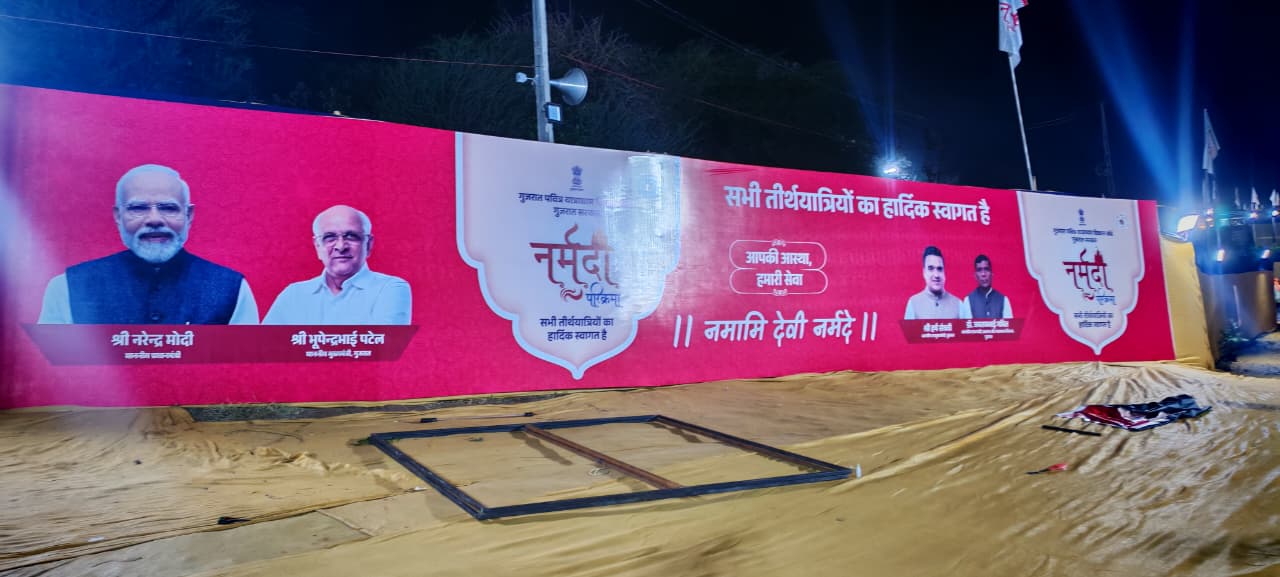
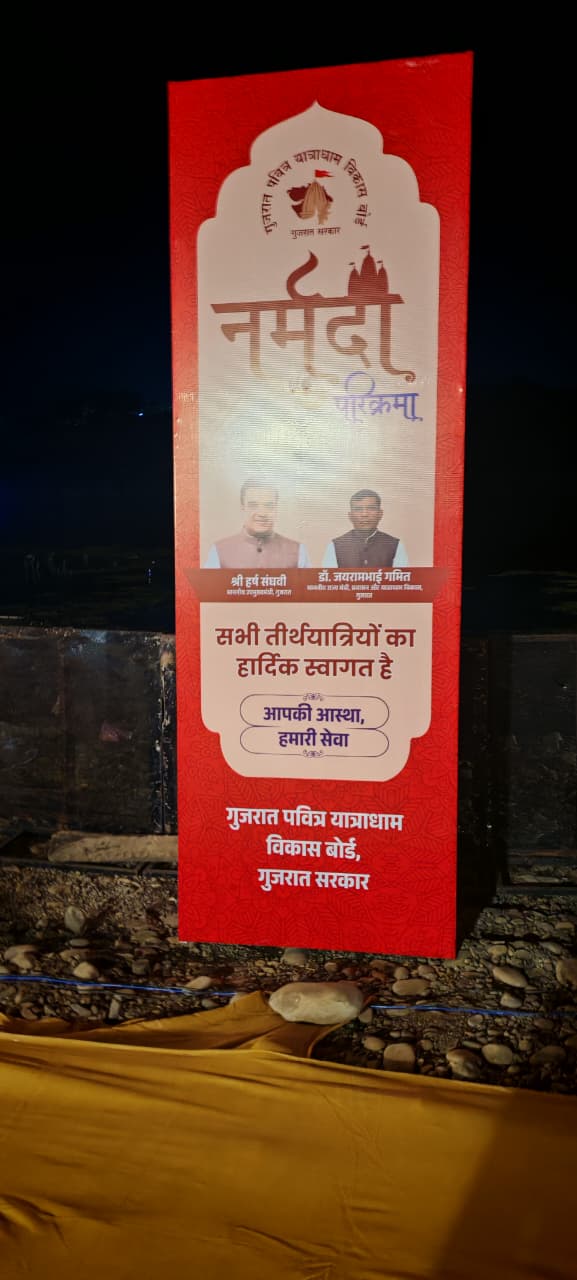
This has led to a striking and controversial comparison: posters and banners of the Prime Minister, Chief Minister, and Deputy Chief Minister appeared every 200–300 meters, yet proper lighting was absent in those very areas.
This raises a fundamental question:
Was priority given to the safety and convenience of devotees, or to the display of political faces?
Promotion vs. the Spiritual Essence of the Parikrama
Government initiatives aimed at developing religious sites and improving pilgrimage facilities are welcome. However, when the line between religious tradition and political promotion begins to blur, concerns naturally arise.
The extensive presence of political posters and banners along the route has led many devotees to feel that the focus was more on branding than on facilities. A common question among pilgrims has been: if the expenditure was truly for world-class facilities, why were improvements in lighting, guidance systems, cleanliness, resting areas, drinking water, sanitation, and emergency medical services not clearly visible?
This brings forth a core question:
What matters more—marketing or spiritual pilgrimage?
Rising Boat Fares and Declining Spirit of Service?
Reports suggest that boat fares have been increased to ₹50 per person this year. When both expenditure and charges rise, devotees naturally expect a visible improvement in facilities.
However, discussions indicate that several charitable trusts, local service groups, and volunteer-driven initiatives—once integral to the parikrama—have shown reduced enthusiasm this year. Reasons cited include increasing commercialization and an “event-centric” approach that sidelines the traditional spirit of selfless service.
The Narmada Parikrama has always been a journey of service, devotion, and surrender. If it gradually transforms into “religious tourism” or a “tourist attraction,” its essence is bound to be affected. Some devotees feel that the parikrama is becoming more of a managed spectacle than a deeply spiritual experience—an issue that calls for serious reflection.
Massive Increase in Spending: A Need for Transparency
When expenditure rises from ₹2.6 crore to ₹30 crore within a year, transparency, accountability, and social auditing become essential in the public interest.
Key questions include:
-
How and where were public funds utilized?
-
How much was spent on lighting?
-
What improvements were made to routes?
-
What enhancements were made in healthcare and safety arrangements?
-
What was the actual expansion of water, sanitation, and accommodation services?
-
How much was spent on posters and promotional materials?
Clear answers to these questions are necessary to maintain the trust of devotees. In matters of faith and religion, lack of transparency is not just an administrative issue—it is a moral one.
A Question of Ethics, Values, Trust, and Responsibility
The Mother Narmada Parikrama is not merely an administratively managed event; it is deeply connected to the faith, emotions, and cultural identity of millions. Therefore, material development alone is not sufficient. What is needed is:
-
Ethical conduct
-
Value-based governance
-
Preservation of trust
-
Transparent administration
-
Respect for the devotional atmosphere
If devotees begin to feel that publicity is being prioritized over their safety, comfort, and spiritual experience, it could lead to a broader crisis of social and religious trust.
Not Just Spending on Faith, but Respecting Faith
Increasing expenditure on the Narmada Parikrama is not inherently wrong. If it genuinely enhances safety, facilities, health services, lighting, cleanliness, and the spiritual environment, it is commendable.
However, if increased spending is not visible in facilities but is evident in posters, banners, and promotion, it naturally leads to doubt and dissatisfaction. This is the right time for the government to clarify:
-
A detailed breakdown of total expenditure
-
The actual condition of facilities
-
Accountability for shortcomings in lighting and safety
-
Limits on political promotion in religious events
-
Greater respect and participation for charitable trusts and local communities
The Mother Narmada Parikrama is a sacred circle of devotion, not a platform for political display. Faith is not sold here—it is served. Here, emotions should shine, not banners; and what is needed is not the pride of expenditure, but the dharma of transparency.
Conclusion
The 2026 Narmada Parikrama has begun on a grand scale, but the questions surrounding it are equally serious. To preserve this historic and spiritual legacy, it is essential for the government, local administration, service organizations, and society to collectively reflect:
Do we wish to preserve the Narmada Parikrama as a sacred celebration of devotion, discipline, and culture, or are we pushing it toward marketing and commercialization?
True respect for Mother Narmada lies not in posters, but in providing devotees with light, safety, facilities, and a deeply spiritual experience.
The Prime Minister’s Presence and a Message of Global Peace?
Some devotees and community leaders also believe that India’s Prime Minister should present the spiritual and cultural significance of the Narmada Parikrama on the global stage with greater depth. If this pilgrimage can convey a message of world peace, love for nature, and spiritual coexistence, it could elevate India’s spiritual heritage internationally.
However, the first condition for this is that the parikrama must remain a sacred experience—not a medium for promotion.
🙏 Hail Mother Narmada! 🙏
0 thoughts on “Grand start of Mata Narmada Parikrama 2026, but more promotion than devotion? Question of facilities, transparency, and values in front of historic faith”
Leave a Reply
Your email address will not be published. Required fields are marked *

RECENT NEWS
- Tarot Horoscope for September 11: Taurus will get relief from old stresses and complications.
- Rs 95.65 lakh embezzlement in Savli's company: Former assistant manager commits fraud by transferring money from bank accounts to wife's and two other accounts
- From the middle of September, these 5 zodiac signs will be lucky, a yoga of immense success.
- Digital monitoring with AI cameras to reduce AMTS accidents: Over speed, driver talking on phone, smoking or snoring in a moving bus, the control room will be alerted immediately
- Harshit Devani's artwork gift from Veraval accepted by PM Modi: Late in Vadodara. Seeing the memorial portrait of Hiraba and PM Modi, the artist said - the emotions cannot be described in words